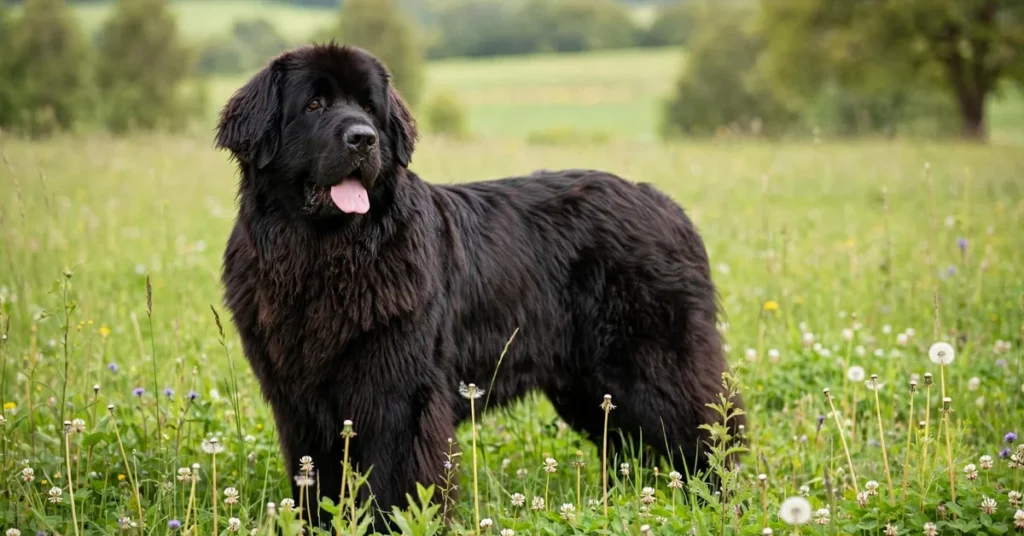
Picture this. You walk through the door after a long day, and a dog the size of a small couch lumbers over to greet you. He leans his whole body against your legs, looks up with the softest brown eyes, and lets out a sigh like he has been waiting for you all his life.
That is the Newfoundland dog in a nutshell. Big enough to make guests nervous, gentle enough to win them over in about thirty seconds.
I am Marcus Reed, a CPDT-KA certified dog trainer, and in eight years of training more than 300 family dogs I can tell you this: Newfoundlands are one of the sweetest giants I have ever worked with. They are not for everyone, though. Let me show you exactly what life with one looks like, so you can decide if this water-loving gentle giant fits your home.
Quick Answer: Is a Newfoundland Right for You?
The Newfoundland dog is a giant, water-loving breed known for its calm temper and deep love of kids. Adults weigh 100 to 150 pounds and stand 26 to 28 inches tall. They are easy to train, need only moderate exercise, but drool heavily and shed a lot. Best for: families with space, patient first-time giant-breed owners, and anyone who does not mind slobber on the furniture. Not ideal for: apartment living or hot climates.
📋 Contents (click to open)
The Nanny Dog Personality
Newfoundlands earned the nickname “nanny dog” for a reason. They have a natural instinct to watch over children, the same way they once watched over sailors on fishing boats. They do not just tolerate kids, they genuinely enjoy their company.
These dogs are calm indoors and friendly with strangers, other dogs, and even cats. Aggression is extremely rare in the breed. The American Kennel Club describes the breed as a sweet-tempered companion with a patient, watchful nature, which matches exactly what I have seen in real homes. You can read their full breed profile on the AKC Newfoundland page if you want the official breed standard.
But let me be honest with you. That calm temper comes with a trade. Newfoundlands are sensitive dogs. They shut down with harsh corrections. A raised voice or a rough hand will not make a Newfie behave, it will make him stop trying. The good news? They respond beautifully to kind, reward-based training. A treat, a little praise, and you have a friend for life.
One thing owners always underestimate: this breed needs to be close to people. A Newfoundland left alone in the backyard all day gets lonely fast. They want to be where the family is, even if that means sprawling across the kitchen floor in everyone’s way.
Size, Looks, and That Famous Coat
Let us talk size, because photos do not do these dogs justice. A male newfoundland dog stands 28 inches at the shoulder and can weigh 130 to 150 pounds. Females are a bit smaller at 26 inches and 100 to 120 pounds. When one leans against you, you will feel it.
Their coat is a thing of beauty: a soft, dense undercoat under a coarse, straight outer coat. Most are solid black, but you will also see brown, gray, and the striking black-and-white pattern called Landseer. That thick double coat was built for icy ocean water, which means your Newfie will be perfectly happy in snow and absolutely miserable in a heat wave.
Puppies are deceptively tiny and adorable. Here is the catch: they grow fast and stay clumsy for a long time. A nine-month-old Newfoundland puppy can already weigh 90 pounds and still think he is a lap dog. Start training early, because a polite 40-pound puppy becomes a polite 140-pound adult. An untrained one becomes a 140-pound problem.
Training a Newfoundland Dog
Here is my honest take as a trainer: Newfoundlands are one of the easiest giant breeds to train. They are smart, eager to please, and motivated by food. VCA Animal Hospitals notes that they learn quickly and do best with reward-based training, and that lines up perfectly with my own experience. Their Newfoundland breed guide is worth a read if you want the vet-side view on behavior and health.
Because of their size, obedience training is not optional. A well-trained Newfie is a joy. An untrained one can knock over your toddler without even meaning to. Get them into a class by four months old at the latest.
Puppy Basics That Matter Most
Focus on three things in the first six months. First, loose-leash walking, because you do not want to be dragged by 100 pounds of dog. Second, polite greetings, because jumping up is cute at 20 pounds and dangerous at 120. Third, basic manners like sit, stay, and come.
Socialization and the Sensitive Side
Newfoundlands are naturally friendly, but they still need socialization. Take your puppy everywhere: busy streets, parks, friends’ houses, the vet’s waiting room. Let him meet people of all ages and sizes. Remember his sensitive nature. If something scares him, comfort him gently and try again later. Never punish fear, it only makes it worse.
Want a fun goal? These dogs were born to swim and pull. Water work and carting are wonderful sports for the breed. Once your dog has solid basics, try dock diving or draft work. A Newfoundland pulling a cart of pumpkins at a fall festival is one of the happiest sights in the dog world.
Daily Life: Drool, Space, and Costs
Let us get real about the messy parts, because this is where Newfoundland ownership surprises people. These dogs drool. A lot. After drinking water, after eating, when excited, when bored. You will find slobber on walls, ceilings, and clothes you thought were out of reach. Keep a towel by the water bowl and accept it as the price of admission.
They also shed heavily, especially in spring and fall. The undercoat comes out in clouds. A good brushing routine (more on that below) keeps it manageable, but if you hate dog hair, this is not your breed.
Space matters. A newfoundland dog does not need a mansion, but he does need room to sprawl and a yard helps a lot. Apartments are a stretch. Not because of energy (they are pretty lazy indoors), but because of pure bulk. One adult Newfie plus a small apartment kitchen is a comedy routine you will get tired of.
Budget time. Giant dogs cost giant money. Expect to spend $100 to $200 per month on high-quality large-breed food, plus higher vet bills, bigger crates, and stronger everything. Pet insurance is smart for this breed, since hip and elbow issues can mean expensive surgery down the road.
Grooming, Exercise, and Health
Good news first: Newfoundlands do not need fancy haircuts. Their grooming is simple but steady. Brush once or twice a week with a slicker brush and an undercoat rake, and daily during heavy shedding seasons. Trim nails monthly, clean those droopy ears weekly, and bathe every month or two, or whenever swamp dog perfume sets in.
The Exercise Sweet Spot
Newfoundlands are low to moderate energy dogs. A daily walk of 30 to 45 minutes plus some playtime is plenty for most adults. They love swimming, so if you have access to safe water, take advantage of it. Swimming builds muscle without stressing those big joints.
Watch the weather. That thick coat means heat is the enemy. In summer, walk early in the morning, carry water, and never leave your dog in a warm car. In winter, though? Your Newfie will be the happiest dog on the block.
Health: What to Watch For
Like all giant breeds, Newfoundlands have a shorter lifespan, typically 8 to 10 years. The main concerns are hip and elbow dysplasia, heart conditions like subaortic stenosis, and bloat. This is why buying from a responsible breeder matters so much. Ask for health clearances on both parents, especially hips, elbows, and heart. A good breeder will hand you that paperwork without being asked twice.
Feed a large-breed puppy formula and keep your puppy lean. Growing too fast or carrying extra weight puts serious stress on developing joints. Your vet can help you find the right growth curve.
Newfoundland vs Other Gentle Giants
How does the Newfoundland stack up against other big, family-friendly breeds? Here is a quick comparison to help you decide.
| Breed | Size | Temperament | Grooming | Exercise | Best For |
|---|---|---|---|---|---|
| Newfoundland | 100-150 lbs | Calm, sweet, nanny-like | Heavy shedding, brush 2x/week | Moderate, loves swimming | Families wanting a gentle water dog |
| Great Pyrenees | 85-120 lbs | Independent, guardian instinct | Heavy shedding, seasonal blows | Moderate | Rural homes, experienced owners |
| Saint Bernard | 120-180 lbs | Patient, goofy, lovable | Heavy shedding and drooling | Low to moderate | Families wanting maximum cuddle |
| Bernese Mountain Dog | 70-115 lbs | Affectionate, eager, playful | Heavy shedding, brush 2x/week | Moderate | Active families wanting a slightly smaller giant |
| Leonberger | 90-170 lbs | Friendly, playful, social | Heavy shedding, regular brushing | Moderate to high | Active owners wanting a sporty giant |
| Great Dane | 110-175 lbs | Gentle, laid-back, goofy | Low, short coat | Moderate | Owners wanting a giant with easy grooming |
The newfoundland dog stands out in this group for one reason: water. No other giant breed on this list loves swimming quite as much. If you live near a lake or have a pool, a Newfie will be in heaven. If grooming effort is your main worry, the Great Dane’s short coat is the easier path.
Conclusion
So, should you bring home a newfoundland dog? If you have the space, the patience, and a sense of humor about drool, you are in for one of the most rewarding dogs on the planet. You will get a calm, loyal companion who adores your kids and greets every day with a wagging tail and a wet nose.
Just go in with open eyes. The shedding is real. The vet bills are bigger. And you will never drink from a water glass again without checking for slobber first. In my experience, families who understand the tradeoffs fall head over heels, and the dog pays them back with a lifetime of gentle, goofy love.
If that sounds like your kind of dog, start looking for a responsible breeder or a breed-specific rescue. Take your time, ask questions, and trust your gut. The right Newfie will choose you right back.
Related Guides
- Black Lab Guide 2026: 15 Secrets Every Owner Must Know
- Chocolate Lab Guide: 9 Facts Every Owner Must Know (2026)
- Yellow Lab Guide: 9 Honest Facts Before You Adopt (2026)
- Best Dog Breeds for Families: 12 Kid-Friendly Picks for Every Home (2026)
- German Shepherd Puppy: Complete First Year Guide (2026)
- Hypoallergenic Dog Breeds: 18 Low-Shedding Picks (2026)
- Papillon Dog: Complete Guide
- Dog Names: 150+ Best Picks for 2026 (Male, Female & Unique)
Frequently Asked Questions
Are Newfoundland dogs good family dogs?
Yes, Newfoundlands are one of the best family dogs among giant breeds. They are famously patient with children and earned the nickname nanny dog for their watchful, gentle nature around kids. They are also friendly with strangers and other pets. Just remember that their huge size means young children should always be supervised around them, even though the dog would never intentionally cause harm.
How big do Newfoundlands get?
Male Newfoundlands typically stand 28 inches tall and weigh 130 to 150 pounds, while females stand about 26 inches and weigh 100 to 120 pounds. Some males can push past 150 pounds. Puppies grow very quickly, so early training is important before they reach their full giant size.
Do Newfoundland dogs drool a lot?
Yes, Newfoundlands are heavy droolers. Their loose jowls mean slobber after drinking, eating, exercising, or getting excited. Many owners keep drool towels around the house and by the water bowl. If drool bothers you, this is probably not the breed for you.
How much does a Newfoundland puppy cost?
A Newfoundland puppy from a responsible breeder typically costs between 1,500 and 3,000 dollars, depending on location and the breeder’s reputation. Puppies from health-tested parents with champion bloodlines can cost more. Be cautious of prices far below this range, as they may signal a puppy mill. Breed rescues are a great lower-cost alternative, usually charging 300 to 600 dollars in adoption fees.
Are Newfoundlands easy to train?
Yes, Newfoundlands are one of the easiest giant breeds to train. They are intelligent, eager to please, and highly food motivated. They respond best to positive, reward-based training and shut down with harsh corrections. Because of their size, obedience training is essential, and most experts recommend starting classes by four months of age.
How long do Newfoundland dogs live?
Newfoundlands typically live 8 to 10 years, which is standard for giant breeds. Buying from a breeder who health-tests for hip dysplasia, elbow dysplasia, and heart conditions can improve your odds of a longer, healthier life. Keeping your dog at a lean weight and providing regular vet care also make a real difference.