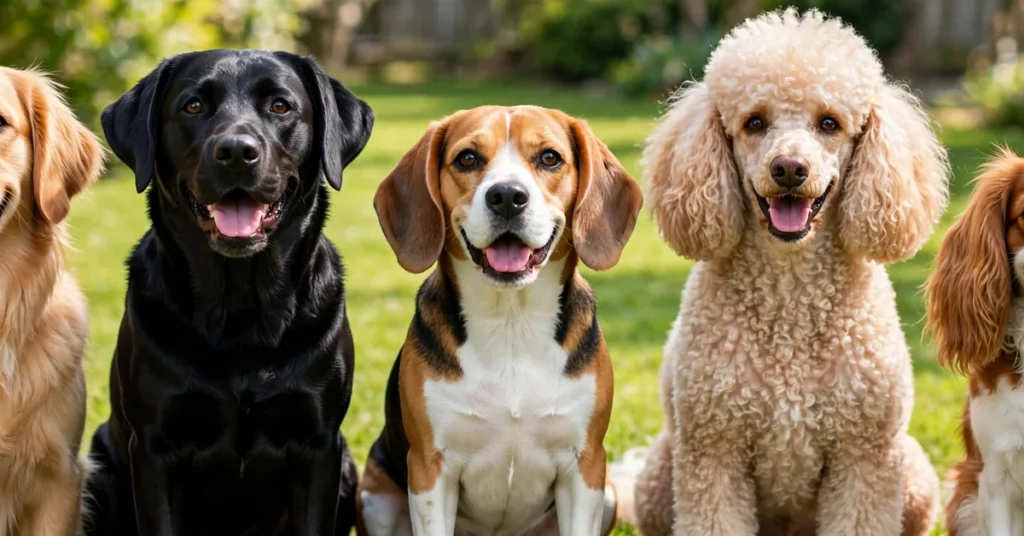
If you’re searching for the best dog breeds for families, you’re in the right place. This guide matches 12 proven kid-friendly breeds to your home, kids’ ages, and lifestyle — plus 4 popular breeds to think twice about.
Every kid dreams of it. A dog of their very own.
But here’s the thing nobody tells you: the “best” family dog doesn’t exist.
The Labrador that’s perfect for your neighbor? Might be a nightmare for you.
Because the right breed depends on your kids’ ages, your home, your schedule. Get it wrong, and you’re looking at chewed furniture, endless barking, and a dog that doesn’t fit.
This guide does what others don’t: it matches 12 proven family breeds to your actual life. not some generic ranking. You’ll learn the 5 traits that truly matter, which popular breeds to avoid with small kids, and how to survive the first 7 days.
No fluff. No paid placements. Just honest matching. Let’s find your dog.
Quick Answer: The Best Dog Breeds for Families
The short version: For most families, you cannot go wrong with a Labrador Retriever or Golden Retriever.
They are friendly, patient, and famously easy to train.
Smaller home? Look at the Cavalier King Charles Spaniel or Bichon Frise.
Worried about shedding? The Poodle is your new best friend.
Teenagers and a big yard? A Boxer or Newfoundland might steal your heart.
Keep reading to match a breed to your kids’ ages, your space, and your lifestyle, and to see which popular breeds are actually harder with small children.
📋 Contents (click to open)
- What Actually Makes a Dog “Family-Friendly”?
- The 12 Best Dog Breeds for Families
- Best Family Dog Breeds: Comparison Table
- 4 Popular Breeds to Think Twice About (With Small Kids)
- How to Pick the Right Breed for YOUR Family
- The First 7 Days With Your New Family Dog
- Related Guides
- Frequently Asked Questions
- Final Thoughts
What Actually Makes a Dog “Family-Friendly”?
Before the list, let us get honest about what the label really means.
In my 8 years of training family dogs, I have learned this: a family-friendly dog is not just a dog that “likes kids.” It is a dog with five key traits.
– Marcus Reed, CPDT-KA Certified Trainer
The 5 Traits That Matter
1. Patience with clumsy handling.
Kids pull ears. They hug too hard. A good family dog tolerates this without snapping.
2. A gentle mouth.
Family favorites have “soft mouths.” They can carry an egg without cracking it.
3. Trainability.
A smart, eager dog learns house rules fast. A stubborn one tests every boundary.
4. An energy level you can meet.
This is where most families go wrong. Match the dog’s engine to your family’s fuel.
5. Tolerance for noise and chaos.
Doorbells. Crying babies. Video games. The best family dogs shrug it all off.
One more truth: no breed is automatically safe around children. Every dog should be supervised with small kids.
The American Kennel Club’s list of the best dog breeds for kids is another solid reference to compare against your shortlist.
The 12 Best Dog Breeds for Families
1. Labrador Retriever: Best for Active Families
Best for: Families who live outdoorsy lives and want a dog that joins in everything.
The Labrador held the American Kennel Club’s most-popular-breed spot for 31 straight years, and it earned every one of them.
Labs are the Swiss Army knife of family dogs: playful with kids, friendly with strangers, patient with toddlers, and smart enough to learn the house rules in weeks.
They retrieve, they swim, they cuddle. If your weekends involve parks, hikes, or a big backyard, a Lab will be in heaven.
Quick facts:
- Large (55-80 lbs)
- High energy
- Heavy shedding
- Great with toddlers when supervised
Watch out for: That famous Lab enthusiasm. A young Lab is basically a furry wrecking ball, so training (and a fenced yard) matters.
2. Golden Retriever: Best for First-Time Dog Owners
Best for: Families getting their very first dog.
If the Lab is the athlete, the Golden is the therapist.
Goldens are famously gentle, forgiving of rookie mistakes, and almost absurdly eager to please, which makes them one of the easiest good dogs for kids to train.
They seem to read children’s emotions.
Ask any Golden owner about the moment their dog rested its head on a crying child’s lap, and watch their eyes go soft.
Quick facts:
- Large (55-75 lbs)
- High energy
- Heavy shedding
- Wonderful with kids of all ages
Watch out for: The coat. That gorgeous fur ends up on everything you own. Brush often, vacuum always.
3. Cavalier King Charles Spaniel: Best Small Family Dog
Best for: Apartments, townhouses, and families who want a lapdog with a big heart.
Everything about the Cavalier says “companion.” They are small enough for any home, gentle enough for careful kids, and adaptable enough to match your energy: up for a walk, equally happy melted into the couch.
For families with limited space, the Cavalier is often the single best small dog breed for families, period.
Quick facts:
- Small (12-18 lbs)
- Moderate energy
- Moderate shedding
- Best with older, gentle kids
Watch out for: They are fragile. Toddlers who are still learning “gentle hands” can accidentally hurt them. Also ask breeders about heart screening, since the breed is prone to mitral valve disease.
4. Beagle: Best for Playful, Outdoorsy Kids
Best for: Families with school-age kids who never sit still.
Beagles are merry little comedians. They are sturdy, cheerful, and always up for an adventure, which makes them fantastic partners for kids aged six and up.
They are also one of the more affordable family friendly dog breeds to buy and keep. That nose, though. It runs the show.
Quick facts:
- Small-medium (20-25 lbs)
- High energy
- Moderate shedding
- Sturdy enough for rough-and-tumble play
Watch out for: Scent-driven wandering. A Beagle off-leash follows its nose out of the neighborhood. Secure fences and leashes are non-negotiable.
5. Poodle (Standard or Miniature): Best Low-Shedding Family Dog
Best for: Families with allergies who still want a real dog, not a compromise.
Forget the fancy haircut stereotype. Poodles are athletes and brainiacs: among the smartest breeds on earth, athletic, and blessed with a curly coat that barely sheds.
The Standard Poodle is a big, goofy playmate for kids; the Miniature fits smaller homes. Either way you get a dog that learns fast and sneezes less.
Quick facts:
- Medium-large (40-70 lbs Standard; 10-15 Miniature)
- High energy
- Very low shedding
- Excellent with kids
Watch out for: Grooming bills. That non-shedding coat needs professional clipping every 6-8 weeks, or it mats.
6. Boxer: Best Goofy Protector
Best for: Families with older kids who want a playful guardian.
Boxers are Peter Pan in dog form: bouncy, silly, and young at heart well into middle age.
They adore children, they are naturally protective without being aggressive, and their expressive faces crack up the whole house.
With teenagers, a Boxer is both playmate and jogging partner.
Quick facts:
- Large (50-80 lbs)
- Very high energy
- Low shedding
- Best with kids 8+
Watch out for: They stay puppy-like for years, which means years of training commitment. A bored Boxer remodels your furniture.
7. Bichon Frise: Best Apartment Family Dog
Best for: City families who need a small, cheerful, low-shedding dog.
The Bichon is a little white cloud of happiness.
Playful but not hyper, sturdy for its size, and famously low-shedding, it checks nearly every box for apartment living with kids.
Bichons are also natural performers who love learning tricks, which gives kids a fun, safe way to bond through training.
Quick facts:
- Small (12-18 lbs)
- Moderate energy
- Very low shedding
- Great with gentle kids
Watch out for: Separation anxiety. Bichons hate being alone all day, so they suit families where someone is usually home.
8. Bulldog: Best Calm Couch Companion
Best for: Low-key families who want a mellow, loving shadow.
If your family’s idea of a perfect evening is a movie marathon, the Bulldog is your spirit animal. Bulldogs are calm, loyal, and famously tolerant of children.
They need short walks, not marathons, and they repay your love with snores, snorts, and total devotion.
Quick facts:
- Medium (40-50 lbs)
- Low energy
- Moderate shedding
- Patient with kids
Watch out for: Health and heat. Bulldogs are prone to breathing issues and overheat fast. They are also not cheap at the vet.
9. Collie (Rough): Best Loyal, Gentle Herder
Best for: Families who want a devoted, almost human-like companion.
Thanks to a certain famous TV dog, everyone knows the Collie is loyal. What surprises people is how gentle they are with children.
Collies are sensitive, intuitive, and naturally protective. They herd the kids (gently), they learn routines fast, and they seem to take family membership as a solemn duty.
Quick facts:
- Large (50-75 lbs)
- Moderate-high energy
- Heavy shedding
- Wonderful with kids
Watch out for: The coat needs real brushing commitment, and Collies can be sensitive to loud chaos. They prefer harmony.
10. Newfoundland: Best Gentle Giant
Best for: Families with space who want the sweetest big dog on earth.
Newfoundlands are famously called “nanny dogs” for a reason. These giant, drooling sweethearts are patient, calm, and almost unbelievably gentle with children.
A Newfie will let a toddler use it as a pillow and sigh contentedly. If you have the room (and the mop), there is no kinder giant.
Quick facts:
- Giant (100-150 lbs)
- Moderate energy
- Heavy shedding + drool
- Superb with kids
Watch out for: Everything is supersized: food bills, vet bills, drool strings on the ceiling. And they do not fit in small cars.
11. Goldendoodle: Best Family-Friendly Mix
Best for: Families who want the Golden’s heart with less shedding.
The Goldendoodle is not technically a breed, it is a Golden Retriever–Poodle mix, but it deserves its spot because families keep choosing it.
You often get the Golden’s friendliness with a lower-shedding coat, plus that teddy-bear look kids adore.
Just know that mixes are variable: coats, size, and temperament can differ pup to pup.
Quick facts:
- Medium-large (50-90 lbs typical)
- High energy
- Low-moderate shedding
- Great with kids
Watch out for: Because they are so popular, puppy mills love them. Only buy from breeders who health-test both parents, or better yet, check doodle rescues.
12. Shih Tzu: Best for Quieter Households
Best for: Calm families, including those with older kids or grandparents at home.
The Shih Tzu was literally bred to sit on laps in palaces, and it has never forgotten it.
These little charmers are affectionate, sturdy for their size, and perfectly content in apartments.
They are less frantic than many small breeds, which makes them a peaceful fit for gentle households.
Quick facts:
- Small (9-16 lbs)
- Low-moderate energy
- Low shedding (with grooming)
- Best with calm, older kids
Watch out for: The long coat needs daily brushing or a short “puppy cut” kept up by a groomer. They can also be stubborn about housetraining.
Best Family Dog Breeds: Comparison Table
| Breed | Size | Energy | Shedding | Best With |
|---|---|---|---|---|
| Labrador Retriever | Large (55-80 lbs) | High | Heavy | Toddlers+ (supervised) |
| Golden Retriever | Large (55-75 lbs) | High | Heavy | All ages |
| Cavalier King Charles Spaniel | Small (12-18 lbs) | Low-Mod | Moderate | Older kids |
| Beagle | Small-Med (20-25 lbs) | High | Moderate | School-age kids |
| Poodle | Med-Large (10-70 lbs) | High | Very low | All ages |
| Boxer | Large (50-80 lbs) | Very high | Low | Kids 8+ |
| Bichon Frise | Small (12-18 lbs) | Moderate | Very low | Gentle kids |
| Bulldog | Medium (40-50 lbs) | Low | Moderate | All ages |
| Collie | Large (50-75 lbs) | Mod-High | Heavy | All ages |
| Newfoundland | Giant (100-150 lbs) | Moderate | Heavy | All ages |
| Goldendoodle | Med-Large (50-90 lbs) | High | Low-Mod | All ages |
| Shih Tzu | Small (9-16 lbs) | Low-Mod | Low | Older kids |
4 Popular Breeds to Think Twice About (With Small Kids)
Honesty time. These are not bad dogs. In the right homes, they are wonderful.
But if you have small children, they are harder matches than the internet admits. You deserve to know before you fall in love.
Dalmatian. Yes, the movie lied a little. Dalmatians are high-energy, strong-willed dogs that can get snappy when overwhelmed by chaos. They need enormous amounts of exercise, and a bored Dalmatian in a house full of shrieking kids is a recipe for nipped heels and frazzled parents.
Chow Chow. That teddy-bear face hides an aloof, independent soul. Chows bond deeply with their people but have famously low tolerance for rough handling, hugging, or unpredictable toddler behavior. They are a better fit for calm, experienced households.
Akita. Powerful, dignified, and intensely loyal, Akitas are incredible dogs for the right owner. But their protective instincts and sheer strength demand confident, consistent handling. With small kids and their friends running in and out, most families are outmatched.
Weimaraner. The “gray ghost” is a Velcro dog with marathon energy. Leave one under-exercised and it will eat your drywall out of boredom and anxiety. They are amazing for runners with older kids, and exhausting for everyone else.
The pattern? High energy plus low tolerance for chaos. If that sounds like your house on a Tuesday, steer toward the patient breeds above.
How to Pick the Right Breed for YOUR Family
Forget generic rankings. Run every breed through these three filters and your shortlist will build itself.
Filter 1: Your Kids’ Ages
Toddlers (0-4) need the saints: Labs, Goldens, Cavaliers.
They are patient, sturdy, and forgiving.
School-age kids (5-12) unlock the fun ones: Beagles, Boxers, Poodles.
They can help with walks and training.
Teens (13+) can handle demanding breeds. The dog often becomes their closest confidant.
Filter 2: Your Space
Apartment? Stay small and calm: Cavalier, Bichon Frise, Pug, French Bulldog.
House with a yard? The world opens up: Labs, Goldens, Boxers, Newfoundlands.
Be brutally honest here. A big dog in a small flat is stressful for everyone.
Filter 3: Your Time
This is the one families underestimate.
Under 30 minutes a day? Stick with Bulldogs, Cavaliers, or Shih Tzus.
An hour? Most breeds work.
90+ minutes? Bring on the herders and sporting dogs.
A dog’s needs do not pause for busy weeks.
The First 7 Days With Your New Family Dog
The breed is chosen. Now the part nobody writes about: surviving week one.
Day 1-2: Decompression. Your new dog is overwhelmed, even if it does not show it. Keep things quiet. Show it the water bowl, the bed, the yard. Let the kids observe more than touch. No parade of visiting relatives yet.
Day 3-4: Routine starts. Dogs relax into predictability. Same feeding times, same walk route, same bedtime. Teach the kids the three rules: let the dog come to you, no hugging yet, and always ask before petting.
Day 5-7: Training begins. Short, fun sessions, five minutes at a time. Kids over six can help with “sit” using treats. This is also when you book the vet checkup if you have not already, and start crate training if you are using one.
The golden rule of week one: every good thing comes at a boring pace.
Final Thoughts
Here is the truth this whole guide has been building toward: the best dog breeds for families are not a ranking. They are a match.
The “perfect” Labrador is the wrong dog for a family that cannot meet its energy needs, and the “difficult” Weimaraner is the perfect dog for a marathon runner with teenagers.
So start with your life, not the list. Filter by your kids’ ages, your space, and your time.
Meet the actual dog before you commit, because individual temperament beats breed stereotype every time.
And seriously consider adoption. Some of the best family dogs I have ever trained were rescues. Shelter staff can often tell you exactly how a dog acts around kids, which is more than any breed description can promise.
For a second opinion from a major pet nutrition brand, see Royal Canin’s guide to family-friendly dog breeds.
The right dog will not just join your family. It will become the heartbeat of it. Choose well, and enjoy every muddy, joyful minute.
Frequently Asked Questions
Related Guides
- Best Dog Foods for Sensitive Stomach: 10 Gentle Picks That Actually Help. Once you have your family dog, feed it right.
- Small Dog Breeds: 15 Compact Companions for Any Home
- Dog Names: 200+ Ideas for Your New Best Friend (coming soon)