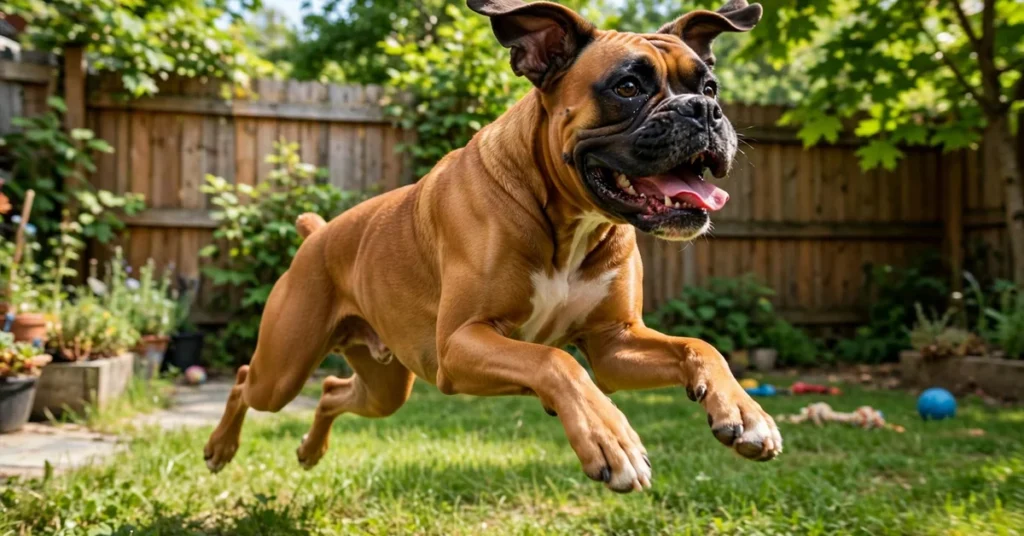
The Boxer does a full body wiggle when happy. Back end going one way, front end the other. Owners call it the kidney bean dance.
If that image made you smile, the Boxer dog might be your breed. These clowns in muscle suits are equal parts athlete, comedian, and bodyguard.
I am Marcus Reed, a certified dog trainer with 8 years of experience. Boxers are one of my favorite breeds to train because they never lose their puppy joy. But they are not for everyone.
This is the complete Boxer dog guide: temperament, health, costs, and whether this breed fits your life.
Quick Answer: The Boxer Dog at a Glance
Short on time? Here is the Boxer in 30 seconds.
Size: 48 to 85 pounds. Medium large and powerfully built.
Temperament: Playful, loyal, patient with kids, wary of strangers.
Energy: High. Needs 1 to 2 hours of daily activity.
Lifespan: 10 to 12 years.
Best for: Active families who want a fun, protective companion.
Now the full story, including the health issues nobody mentions upfront.
📋 Contents (click to open)
Boxer Dog Temperament: The Eternal Puppy
Boxers stay playful far longer than most breeds. A 5 year old Boxer still acts like a puppy, and owners love them for it.
With Family
Deeply loyal and affectionate. Boxers bond hard with their people and want to be involved in everything. They are famously patient with children.
With Strangers
Polite but watchful. A well socialized Boxer is friendly yet alert, which makes them natural watchdogs. They notice everything.
With Other Pets
Usually good when raised together. Their bouncy play style can overwhelm small dogs, so supervise early interactions.
The Boxer Bounce
Boxers play by jumping straight up with all four paws off the ground. Trainers call it the Boxer bounce. It is adorable at 20 pounds and chaotic at 70. Teach a solid sit early.
Boxer Dog Health: What to Know
Honest talk: Boxers have more health concerns than average. Know them before you commit.
| Health Issue | How Common | What It Means | Prevention |
|---|---|---|---|
| Heart conditions | Common | Cardiomyopathy and aortic stenosis | Annual heart screening |
| Hip dysplasia | Common | Loose hip joints, arthritis | Keep lean, avoid hard jumping |
| Certain cancers | Above average | Mast cell tumors, lymphoma | Regular vet checks, early detection |
| Bloat | Moderate risk | Stomach twists, emergency | Two smaller meals, no exercise after eating |
| Skin allergies | Common | Itching, hot spots | Quality diet, vet guidance |
| Thyroid issues | Moderate | Weight gain, low energy | Blood testing, medication |
Choose a breeder who screens for heart and hip problems. Ask to see the test results. The PetMD Boxer breed guide covers these risks in detail, and the AKC Boxer page lists the official breed health standards.
Heat sensitivity is serious. Boxers have short muzzles and overheat fast. Never exercise a Boxer hard in heat above 80°F. Always carry water and watch for heavy panting.
Daily Care and Exercise Needs
A tired Boxer is a good Boxer. A bored Boxer redesigns your furniture.
Exercise
Plan for 1 to 2 hours daily. Long walks, fetch, swimming, and dog sports all work. Mental exercise counts too. A 15 minute training session tires a Boxer as much as a long walk.
Grooming
Easy. The short coat needs weekly brushing with a rubber mitt. Bathe every few months. Clean ears weekly and trim nails monthly. Boxers do drool, so keep a towel handy.
Feeding
High quality food for active medium large breeds. Two meals a day, not one, to reduce bloat risk. Boxers gain weight easily if under exercised. Measure food, do not free feed.
Training a Boxer Dog
Boxers are smart and eager to please, but they get bored with repetition. Keep it fun.
- Start early: Puppy class at 10 to 12 weeks. Socialize with 100 people and dogs before 4 months.
- Keep sessions short: 10 to 15 minutes, 2 to 3 times a day. End while they still want more.
- Use rewards: Treats, toys, and praise. Boxers shut down with harsh corrections.
- Teach calm: Reward four paws on the floor. The bouncy greeting is cute until it knocks over grandma.
- Crate train: Gives them a safe den and saves your house during the chewing phase.
Trainer secret: Train before meals, not after. A slightly hungry Boxer works much harder for treats. And always train after exercise. A Boxer with zoomies cannot focus.
The Real Cost of Owning a Boxer
Budget for the full 10 to 12 years, not just the cute puppy phase.
- Purchase: $800 to $2,500 from a health tested breeder. Rescue Boxers run $200 to $500.
- Food: $50 to $80 per month for quality kibble.
- Vet care: $500 to $1,000 per year, more as they age. Heart screenings add cost.
- Insurance: $40 to $70 per month. Strongly recommended for this breed.
- Training: $150 to $300 for a puppy class series. Worth every penny.
Is a Boxer Dog Right for You
Be honest with yourself. A Boxer is perfect if you check these boxes.
A Boxer Fits You If
- You are home often and want a true companion
- You can give 1 to 2 hours of daily exercise
- You enjoy training and silly dog antics
- You have kids who want a playful protector
- You can handle drool, snoring, and high energy
Skip the Boxer If
- You work 12 hour days away from home
- You want a calm, low energy dog
- You cannot commit to training
- You live somewhere extremely hot with no AC
Conclusion
The Boxer dog is joy in muscle form. Loyal, hilarious, protective, and forever young at heart.
Give a Boxer exercise, training, and companionship, and you get the best family dog on four legs. Skip those three things and you get chaos.
If you are ready for the commitment, the kidney bean dance alone is worth it.
Related Guides
- Best Dog Breeds for Families: 12 Kid-Friendly Picks for Every Home (2026)
- Black Lab Guide 2026: 15 Secrets Every Owner Must Know
- Yellow Lab Guide: 9 Honest Facts Before You Adopt (2026)
- Chocolate Lab Guide: 9 Facts Every Owner Must Know (2026)
- Newfoundland Dog: Complete Guide
- Papillon Dog: Complete Guide
- German Shepherd Puppy: Complete First Year Guide (2026)
- Dog Names: 150+ Best Picks for 2026 (Male, Female & Unique)
Frequently Asked Questions
Are Boxer dogs good family dogs?
Yes, Boxers are excellent family dogs. They are patient and playful with children, loyal to their people, and naturally protective. They need plenty of exercise and training, but they reward active families with endless affection and fun.
How long do Boxer dogs live?
Boxers typically live 10 to 12 years. Their lifespan depends on genetics, diet, exercise, and veterinary care. Choosing a breeder who screens for heart and hip conditions gives your Boxer the best start.
Are Boxer dogs aggressive?
No, well bred and properly socialized Boxers are not aggressive. They are alert and protective of their family, which can look serious to strangers. Early socialization and consistent training produce a confident, friendly Boxer.
Do Boxer dogs shed a lot?
Boxers shed moderately year round. Their short coat is easy to maintain with weekly brushing using a rubber grooming mitt. They are not hypoallergenic and will leave some hair on furniture and clothes.
How much exercise does a Boxer dog need?
An adult Boxer needs 1 to 2 hours of exercise daily, including walks, play, and mental stimulation. Without enough activity, Boxers become bored and destructive. They are not suited to sedentary households.
Are Boxer dogs easy to train?
Boxers are intelligent and eager to please, which makes them trainable. However, they bore easily with repetition, so keep sessions short, fun, and reward based. Early socialization and puppy classes are highly recommended.