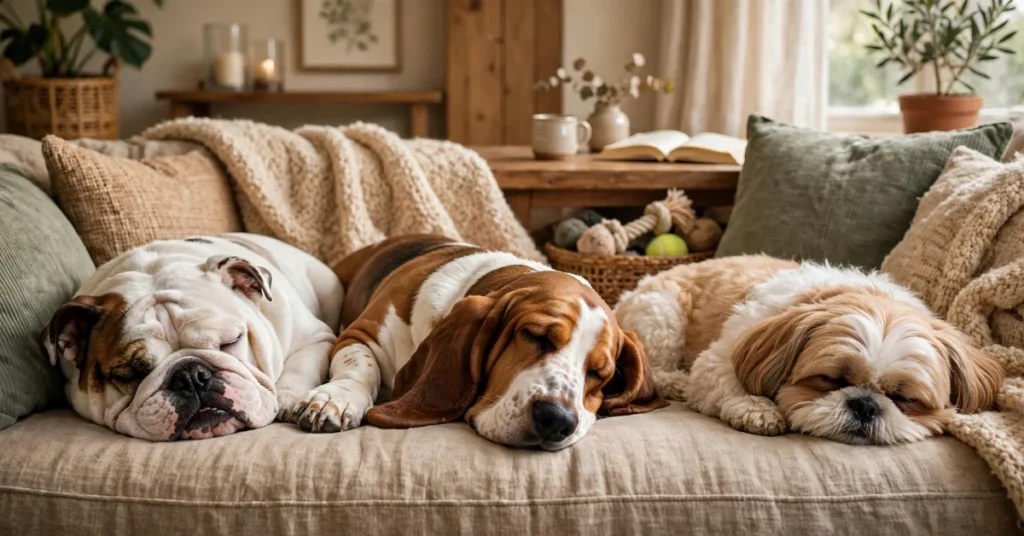
Your dog is asleep. Again. It is 2 PM. He has been napping since breakfast.
Some people would worry. You should celebrate. You picked one of the low energy dog breeds, and honestly, it is the best lifestyle match ever.
I am Marcus Reed. After 8 years of training, I can tell you: low energy is not lazy, it is a feature. These dogs are calm, cuddly, and perfectly happy with a quiet life. This guide covers the best ones and the one health trap to watch for.
Quick Answer: The Best Low Energy Dog Breeds
Short on time? The calmest companions:
Calmest small: Shih Tzu. Nap professional, cuddle expert.
Calmest medium: English Bulldog. Snoring couch philosopher.
Calmest large: Great Dane. Gentle giant, quiet indoors.
Most surprising: Greyhound. The 45 mph couch potato.
Best for apartments: Cavalier King Charles Spaniel. Quiet, gentle, adaptable.
Low energy still needs some exercise. Keep reading for how much.
📋 Contents (click to open)
Low Energy Does Not Mean Lazy
Let us clear this up. A low energy dog is not a broken dog.
It means the breed is genetically wired for calm. Short bursts of activity, then long rest. That is their nature, not a flaw.
These dogs are ideal for:
- Apartment dwellers with no yard
- Seniors who want company, not marathons
- Busy professionals with limited free time
- First time owners who want an easier start
- Anyone who prefers Netflix to hiking
The Key Distinction
Low energy is not the same as untrained and bored. Even calm breeds need daily walks and mental stimulation. A calm dog with zero exercise still develops behavior problems. The bar is lower, not gone.
12 Low Energy Dog Breeds
My picks from years of working with calm dogs.
Small and Serene
Shih Tzu. Bred to warm royal laps. Short walks and naps are the whole program. Grooming is the main work.
Cavalier King Charles Spaniel. Gentle, quiet, loves laps. Great therapy dog material. Watch for heart issues.
Pekingese. Tiny lion with strong opinions. Low exercise needs, high dignity.
French Bulldog. Clownish couch buddy. Short walks only, especially in heat. Breathing needs care.
Pug. Snorting shadow that follows you everywhere. Minimal exercise, maximum snacks.
Medium and Mellow
English Bulldog. The king of calm. Waddles, snores, leans on you. Heat sensitive, needs care in summer.
Basset Hound. Nose to the ground, body on the couch. Stubborn but sweet. Those ears need cleaning.
Chow Chow. Dignified and independent. Calm indoors, aloof with strangers. Not a cuddle bug.
Clumber Spaniel. Gentle, slow, thoughtful. The least known calm breed. Great with kids.
Large and Laid Back
Great Dane. Huge body, calm soul. Famous for being quiet indoors. Short lifespan is the heartbreak.
Greyhound. Retired racers are the ultimate surprise. Sprint once, sleep for 20 hours. Minimal barking.
Saint Bernard. Gentle nanny dog. Drools rivers. Needs space simply because of size.
How Much Exercise They Still Need
“Low energy” has limits. Here is the honest chart.
| Breed | Daily Exercise | Apartment Fit | Notes |
|---|---|---|---|
| Shih Tzu | 15 to 20 min | Excellent | Indoor play counts |
| Cavalier Spaniel | 20 to 30 min | Excellent | Enjoys short outings |
| French Bulldog | 15 to 20 min | Excellent | Avoid heat |
| Pug | 15 to 20 min | Excellent | Watch breathing |
| English Bulldog | 20 min | Good | Heat sensitive |
| Basset Hound | 20 to 30 min | Good | Scent walks are best |
| Greyhound | 30 min | Good | One good walk or sprint |
| Great Dane | 30 to 45 min | Okay with space | Low impact walks |
| Chow Chow | 30 min | Good | Calm daily walk |
Notice: every breed still needs daily movement. “Low energy” means 20 minutes, not zero.
PetMD’s Basset Hound guide backs this up, and the AKC Basset Hound page lists the breed’s official energy level and exercise needs.
The Hidden Trap: Weight Gain
This is the part nobody warns you about. Calm dogs get fat fast.
Low activity means low calorie burn. Add free feeding and too many treats, and your calm companion becomes an overweight companion.
Why It Hits These Breeds Hard
- Bulldogs and Pugs already have breathing issues. Extra weight makes it worse.
- Bassets and Danes carry weight on long backs and big joints. Pain follows.
- Cavaliers are prone to heart disease. Obesity speeds it up.
Marcus’s rule: You should feel your dog’s ribs with light pressure, but not see them. If you cannot feel ribs, cut food by 10 percent and add 5 minutes to walks. Recheck in two weeks.
Keeping a Calm Dog Fit
Measure every meal. No free feeding. Use a measuring cup.
Treats under 10 percent of daily calories. Use tiny training treats.
Daily walks, rain or shine. Short and steady beats occasional and intense.
Food puzzles. Mental work burns energy without running. A snuffle mat is perfect for calm breeds.
Final Thoughts
Low energy dog breeds are proof that the best adventures sometimes happen on the couch.
Give them their short daily walk, watch the waistline, and enjoy the calm.
These dogs will not run marathons with you. They will do something better. They will be there, warm and quiet, every single evening.
Related Guides
- Smallest Dog Breeds: 10 Tiny Dogs, Honest Guide
- Large Dog Breeds: 15 Best Big Dogs for Families (2026)
- Newfoundland Dog: Complete Guide
- Best Dog Breeds for Families: 12 Kid-Friendly Picks for Every Home (2026)
- Cute Dog Breeds: 15 Adorable Picks for Every Home (2026)
- Dog Obedience Training: 5 Commands Every Dog Should Know
- Livestock Guardian Dog Breeds: 10 Best Farm Protectors
- Smartest Dog Breeds: 15 Genius Pups Ranked (2026)
Frequently Asked Questions
What dog breed needs the least exercise?
The English Bulldog, Shih Tzu, Pug, and French Bulldog need the least, around 15 to 20 minutes daily. The Greyhound is the biggest surprise, needing only about 30 minutes despite being a former racer.
Are low energy dogs good for apartments?
Yes, many are excellent apartment dogs. Shih Tzus, Cavaliers, French Bulldogs, and Pugs are small, quiet, and need little space. Even Greyhounds adapt well to apartments with one daily walk.
Do low energy dogs still need walks?
Yes, every dog needs daily walks. Low energy breeds need 15 to 30 minutes instead of hours. Skipping walks entirely leads to weight gain and behavior problems, even in calm breeds.
What is the calmest dog breed?
The English Bulldog and Great Dane are famous for calm indoor behavior. The Clumber Spaniel and Basset Hound are also exceptionally relaxed. Individual personality still varies.
Are greyhounds really low energy?
Yes. Retired racing Greyhounds are famously lazy at home, often called 45 mph couch potatoes. They enjoy one good walk or short sprint daily, then sleep for most of the day.
How do I keep a low energy dog healthy?
Measure every meal, keep treats under 10 percent of calories, walk daily, and monitor weight by feeling the ribs. Use food puzzles for mental stimulation. Regular vet checkups catch weight related issues early.