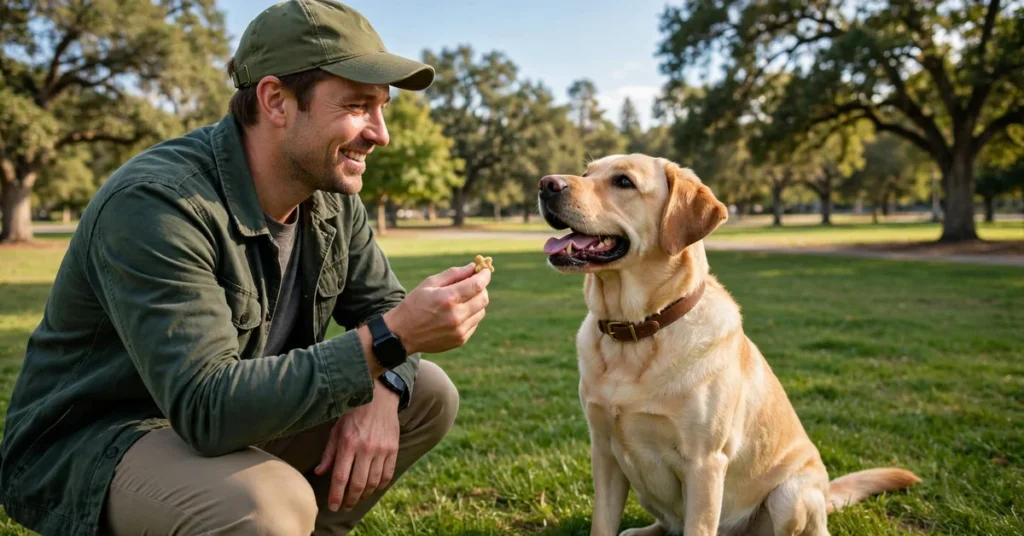
Your dog ignores you at the park, and your face turns red. Sound familiar? I have been there more times than I can count.
I am Marcus Reed, a CPDT-KA certified dog trainer. For eight years I have trained over 300 dogs, from shy puppies to wild rescue dogs. My own Labrador, Cooper, once ate a whole pizza box before I taught him a single cue. Dog obedience training changed everything for us. Here is how it can change things for you too.
Quick Answer
Dog obedience training means teaching your dog to respond to simple cues like sit, stay, and come. You do it with short five minute sessions, treats, and lots of praise. Most dogs learn the five core commands in four to eight weeks. Start today, stay consistent, and your dog will listen better than ever.
📋 Contents (click to open)
What Is Dog Obedience Training (and Why It Matters)
Dog obedience training is simply teaching your dog good manners. Your dog learns what “sit” means and actually does it. Your dog learns “come” and runs back to you instead of chasing a squirrel.
Why does it matter? Three big reasons. Safety: a dog that comes when called stays out of danger. Peace: a dog that knows “leave it” stops grabbing food off the table. Bonding: training builds trust between you and your dog. Dogs love learning, and they want to work with you.
Obedience training is not about being the boss. It is about clear communication. Your dog cannot read your mind, so cues become your shared language.
The 5 Core Commands Every Dog Needs
You do not need twenty tricks. You need five solid commands. These five cover almost every daily situation you will face. Master them first, then add fancy tricks later.
The five core commands are sit, stay, come, down, and leave it. Teach them in this order. Each one builds on the last.
1. Sit
Sit is the easiest command and the best starting point. Hold a treat near your dog’s nose. Slowly move it up and back over the head. When the head tilts up, the butt goes down. The second the butt touches the floor, say “yes” and give the treat. Repeat five times. That is one session.
2. Stay
Start with your dog in a sit. Hold your palm flat like a stop sign and say “stay”. Wait two seconds, then reward. Slowly add more time and more distance. Release your dog with a happy “okay” so they know the stay is over.
3. Come
Come is the most important command for safety. Never punish your dog after they come to you, even if they were naughty. Coming to you must always feel great. Crouch down, open your arms, and make yourself fun. Reward every single time at first.
4. Down
Down helps a jumpy dog settle. Start from a sit. Hold a treat at your dog’s nose and lower it slowly to the floor. Your dog’s body will follow the treat into a down. Say “yes” and reward. Some dogs find this one tricky, so keep sessions short and try again tomorrow.
5. Leave It
Leave it can save your dog’s life. It stops them from grabbing food or trash. Hold a treat in your closed fist. When your dog backs away, say “yes” and reward with a different treat. Never reward with the treat in the closed fist. That is the whole game.
| Command | Difficulty | Weeks to Learn | Everyday Use |
|---|---|---|---|
| Sit | Easy | 1-2 | Stops jumping, waits politely |
| Down | Easy | 1-2 | Settles during meals |
| Come | Medium | 3-6 | Off-leash safety |
| Stay | Medium | 3-6 | Doors, visitors, vet visits |
| Leave it | Hard | 4-8 | Trash, food drops, wildlife |
How to Run a 5-Minute Training Session
Short sessions beat long ones every time. Dogs learn best in tiny bursts. Here is the exact plan I use with every client dog, and PetMD’s puppy training guide recommends short five minute sessions too.
- Pick a quiet spot. Fewer distractions means faster learning.
- Grab small soft treats. Pea-sized pieces work best. Cooper loves tiny bits of cheese.
- Warm up with one known cue. Start with something easy so your dog wins fast.
- Teach one new thing. Five minutes, one goal. No more.
- Reward fast. Mark the good behavior within two seconds. Timing matters more than the treat size.
- End happy. Finish with an easy win and a play break. Your dog should wish the session lasted longer.
Train two to three times a day. Five minutes in the morning and five in the evening beats one long weekend session.
Never train when you are angry or tired. Your dog reads your mood. If you feel frustrated, stop and play instead.
7 Dog Obedience Training Mistakes to Avoid
Most training problems come from simple mistakes. I see these same seven errors with almost every new client. Fix them and training gets easy.
- Repeating the cue. Saying “sit, sit, SIT” teaches your dog to ignore the first two. Say it once, wait, then help them.
- Training too long. Tired dogs stop learning. Keep it short and fun.
- Punishing mistakes. Yelling teaches fear, not skills. Ignore wrong choices and reward right ones.
- Skipping rewards. Your dog works for pay. Fade treats slowly, but never go cold turkey.
- Inconsistent words. If you say “down” but your partner says “lay down”, your dog gets confused. Pick one word per cue.
- Practicing only at home. Dogs do not generalize well. Practice in the yard, on walks, and at the park too.
- Moving too fast. If your dog fails three times in a row, make it easier. Success builds speed.
Use the once rule: say each cue only once. Then wait three seconds. Then help your dog or reset calmly.
If you want expert help, the AKC training programs page can point you to classes near you.
Conclusion
Dog obedience training is not a weekend project. It is a daily habit, and it is one of the best habits you will ever build. Start with sit today. Five minutes. A handful of treats. That is all it takes to begin.
In eight years and 300 dogs, I have learned one thing. Every dog can learn. Some learn fast, some learn slow, but they all learn. Cooper still surprises me. Yours will surprise you too.
Related Guides
Keep learning with these guides from Aviora.
- German Shepherd Puppy: Complete First Year Guide
- Black Lab: Complete Breed Guide, Temperament & Care
- Chocolate Lab Guide: 9 Facts Every Owner Must Know
- French Bulldog Temperament: 12 Traits Every Owner Must Know
- Best Dog Breeds for Families: 15 Kid-Friendly Picks
- Small Dog Breeds: 15 Best Picks for Apartments & Families
- Dog Names: 150+ Best Picks for 2026 (Male, Female & Unique)
- Dog Treats: 9 Healthy Picks Every Dog Owner Must Try
Frequently Asked Questions
How do I start obedience training at home?
Start with sit in a quiet room. Use small treats and keep sessions to five minutes. Practice two to three times a day. Add stay, come, down, and leave it one at a time. Keep it fun and end every session with a win.
How long does dog obedience training take?
Most dogs learn the five core commands in four to eight weeks with daily practice. Puppies may learn faster. Older dogs can take a bit longer. Consistency matters more than speed, so keep sessions short and regular.
Can I train an older dog, or is it too late?
It is never too late. Older dogs can learn every command a puppy can. They may need more patience and shorter sessions. I have trained eight year old rescues with great results. Start today.
Do I need professional obedience training classes?
Not always. Many dogs learn everything they need at home with consistent training. Classes help if your dog struggles with distractions or you want expert feedback. Check the AKC training programs page linked above if you want to find one.
What is the best age to start obedience training?
You can start basic cues at eight weeks old. Keep sessions playful and very short for puppies. PetMD agrees that early positive training builds the best foundation, so do not wait.
How do I stop my dog from jumping on people?
Teach sit as an alternative. Ask for a sit before every greeting. Reward calm paws on the floor. Ignore jumping by turning away. Be consistent, and ask every visitor to do the same.