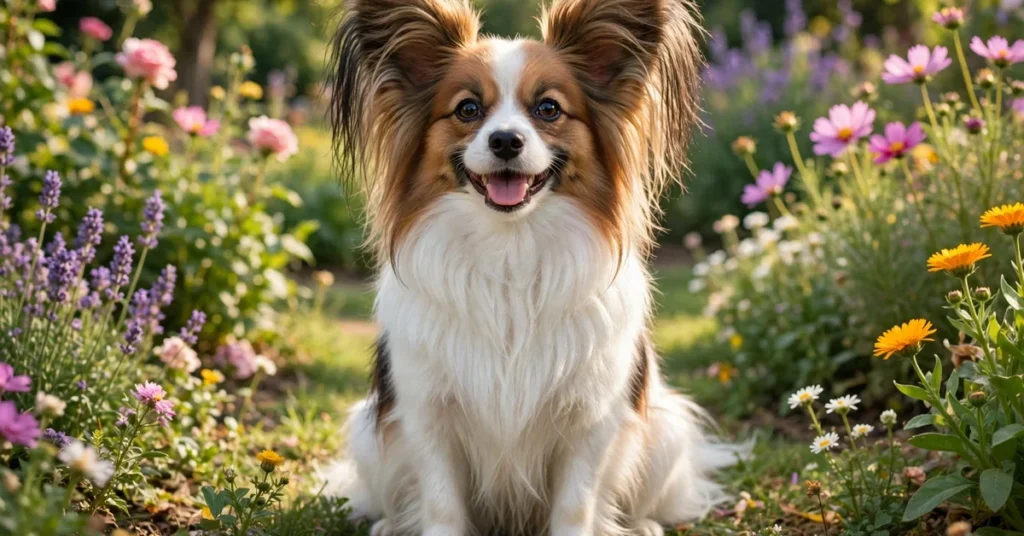
Picture a dog so elegant it could step out of a royal painting, then watch that same dog fly over agility jumps like a furry rocket. The Papillon dog is full of happy surprises like that. Behind those famous butterfly wings of ears beats the heart of a tiny athlete who believes fun should never end.
Papillon is simply the French word for butterfly. One look at those big, fringed ears and the name clicks instantly. But this breed is so much more than a pretty face, and living with one is nothing like owning a fragile little ornament.
I am Marcus Reed, a CPDT-KA certified dog trainer with 8 years of experience and more than 300 family dogs trained. Papillons are one of my favorite breeds to coach because they learn fast, play hard, and love with their whole hearts. In this guide I will tell you exactly what life with one is really like, the good and the tricky.
Quick Answer: Is the Papillon Right for You?
The papillon dog is a happy, brilliant, and surprisingly sporty toy breed in a 5 to 10 pound package. Best for: active apartment dwellers, first-time owners who want a truly trainable pup, and families with respectful older kids. Think twice if: you are gone all day, because these dogs hate being alone, or if you need a silent dog, because they love announcing every visitor. With a 14 to 16 year lifespan, this little butterfly sticks around for a very long time.
📋 Contents (click to open)
- Quick Answer: Is the Papillon Right for You?
- Why Those Ears? The Butterfly Story
- Personality: Big Dog Energy in a 6-Pound Body
- Training: A Little Genius Who Wants to Please
- Grooming: Easier Than That Fancy Coat Suggests
- Health, Food, and a 14-to-16-Year Lifespan
- Papillon vs Other Toy Breeds
- Conclusion
- Related Guides
- Frequently Asked Questions
Why Those Ears? The Butterfly Story
Ever wonder why this breed looks like it is wearing wings on its head? That is exactly how the papillon dog got its name. Its large, upright ears are fringed with long, silky hair that fans out like butterfly wings mid-flutter. The look is so striking that French nobles fell in love with it centuries ago.
Papillons have warmed royal laps for a very long time. Artists were already painting them beside kings and queens in 16th century Western Europe, and the breed became a favorite companion of French aristocracy. Unlike many royal lapdogs that were purely decorative, the Papillon kept a curious, adventurous spark.
Here is a fun twist most people miss. Not every Papillon has upright ears. The drop-eared variety is called the Phalene, which means moth in French. Butterfly and moth, two sides of the same charming breed. Both varieties share the same playful spirit.
Despite the fancy looks, the American Kennel Club calls the Papillon a true doggy dog, describing the breed as happy, alert, and friendly, with surprising athleticism under all that elegance. That matches exactly what I see in training classes. These little dogs want to run, jump, and play just as much as they want to cuddle.
Personality: Big Dog Energy in a 6-Pound Body
Life with a papillon dog is never boring. These pups are cheerful, curious, and endlessly entertaining. They greet the morning like it is the best day ever, and honestly, their joy is contagious.
The sweet stuff
Papillons adore their people. They will follow you from room to room, curl into your lap after playtime, and hand out kisses freely. They are famously friendly, not nervous or snappy like some tiny breeds, and they usually love meeting new people when socialized early. They get along beautifully with other dogs, cats, and respectful kids.
Do not let the tiny body fool you. Papillons are more active than most toy breeds and regularly shine in agility competitions against much bigger dogs.
The honest warnings
Now for the real talk. Papillons are alert little watchdogs, which means barking at knocks, doorbells, and strange sounds. Left bored and untrained, that barking can become a habit your neighbors will notice.
They also bond deeply, and that love has a flip side: separation anxiety. A Papillon left alone for long hours can become stressed and destructive. This is not a breed for someone who works 10-hour days away from home. If you are around most of the day, though, you will have the happiest shadow you ever met.
One more caution for families. Papillons are sturdy for their size, but they are still only 5 to 10 pounds. Very young or rough-and-tumble kids can accidentally injure them. Supervise playtime and teach kids to be gentle, and everyone stays safe and happy.
Training: A Little Genius Who Wants to Please
Training a papillon dog is one of the joys of owning one. Papillons rank among the smartest of all dog breeds, not just among toy breeds, and they genuinely love learning. Tricks, obedience, agility, even therapy dog work, they soak it all up.
What they learn fast
Start with short, fun, reward-based sessions of five to ten minutes. Papillons respond beautifully to treats, praise, and play. They pick up sit, down, stay, and spin in just a few repetitions. I have watched Papillon students master an agility course faster than some Border Collies, and I do not say that lightly.
Socialization matters too. From the day your puppy comes home, introduce new people, sounds, and friendly dogs in a positive way. Early socialization turns an already friendly pup into a confident, well-mannered adult.
The one tricky part: housetraining
Here is the honest bit. Like many tiny breeds, Papillons can be challenging to housetrain. Small bladders plus a stubborn streak means accidents happen. Be patient, keep a strict potty schedule, reward every outdoor success like it is a miracle, and do not punish mistakes. Most Paps get there with consistency, it just takes a little longer than with bigger dogs.
Grooming: Easier Than That Fancy Coat Suggests
That long, silky, flowing coat looks high maintenance, but here is the secret: Papillons have no undercoat. That means less matting and easier brushing than you would expect. A quick brush or comb every few days keeps the coat silky and tangle-free.
Pay special attention to the ear fringe, those gorgeous butterfly wings. That long hair tangles faster than the rest of the coat, so give the ears a little extra love during brushing sessions. A pin brush or a simple pet comb works perfectly.
Bathing only needs to happen when your Pap is actually dirty, and regular brushing keeps the skin healthy underneath. But here is the grooming task that truly matters for this breed: teeth. Papillons are prone to dental disease, so brush those tiny teeth daily if you can. Dental chews help, but nothing replaces the brush.
Nails need trimming every four to six weeks. Many Papillon owners learn to do this at home with small clippers or a nail grinder, and your vet or groomer can show you how the first time.
Health, Food, and a 14-to-16-Year Lifespan
One of the best things about this breed is that the papillon dog is one of the longest-lived breeds in the dog world, with an average lifespan of 14 to 16 years. They are generally healthy, but smart owners know what to watch for.
The most common issues are luxating patella (a kneecap that slips in and out of place), dental disease, collapsing trachea (that goose-honk cough), and an eye condition called progressive retinal atrophy. Responsible breeders screen for these, so always ask about health testing before buying a puppy. You can read a full breakdown of Papillon health and care in this detailed guide from PetMD.
Feeding is simple but has one puppy rule you must know. Tiny Papillon puppies can suffer from low blood sugar if they go too long without eating. Feed puppies four small meals a day until about four months old, then move to three meals. Adult Papillons do great on two meals a day, morning and evening.
Always measure the food. A couple of extra treats a day can turn a 7-pound dog chubby fast, and extra weight strains those little knees. Choose a quality food that meets AAFCO nutrition standards, and ask your vet what fits your individual dog.
Papillon vs Other Toy Breeds
How does the papillon dog stack up against the other tiny favorites? This quick comparison shows where each breed shines, so you can pick the one that fits your life.
| Breed | Size | Temperament | Trainability | Grooming | Best For |
|---|---|---|---|---|---|
| Papillon | 5-10 lbs, 8-11 in | Happy, alert, playful, friendly | Very high, agility star | Moderate, brush a few times a week, no undercoat | Active owners who want a sporty, trainable little dog |
| Chihuahua | 3-6 lbs | Loyal, bold, sassy | Moderate, can be stubborn | Low for smooth coat | Devoted owners wanting a tiny, low-exercise companion |
| Yorkshire Terrier | Around 7 lbs | Bold, confident, feisty | Moderate | High, long coat needs daily care | People who love a glamorous, spirited lapdog |
| Maltese | 4-7 lbs | Gentle, affectionate, sweet | Moderate | High, long white coat tangles easily | Gentle homes wanting a soft, cuddly companion |
| Pomeranian | 3-7 lbs | Bold, curious, vocal | Moderate to high | High, thick double coat sheds | Owners who adore a fluffy little show-off |
| Toy Poodle | 4-6 lbs | Proud, smart, active | Very high | High, needs clipping, low shedding | Brainy, allergy-sensitive homes wanting an athlete |
Conclusion
The Papillon is proof that the best things really do come in small packages. You get a brilliant, athletic, joyful companion with butterfly ears and a heart that never seems to run out of love. They are easy to train, easy to groom, and they live long, full lives.
They are not for everyone. If you need a quiet dog or you are away from home all day, keep looking. But if you want a tiny partner for adventures, training games, and couch cuddles, a papillon dog might be the best decision you ever make. I have trained hundreds of dogs, and I would happily welcome a Papillon into my own home any day.
Related Guides
- Small Dog Breeds: 15 Best Picks for Apartments, Families & First-Timers (2026)
- Best Dog Breeds for Families: 12 Kid-Friendly Picks for Every Home (2026)
- Hypoallergenic Dog Breeds: 18 Low-Shedding Picks (2026)
- French Bulldog Temperament: 12 Traits Every Owner Must Know
- Dog Obedience Training: 5 Commands Every Dog Should Know
- Dog Names: 150+ Best Picks for 2026 (Male, Female & Unique)
- Newfoundland Dog: Complete Guide
- What Can Dogs Eat? 50+ Safe Foods and 15 Dangerous Ones (2026)
Frequently Asked Questions
Are Papillon dogs good pets?
Yes. Papillon dogs make wonderful pets for the right home. They are happy, friendly, and love being with their people. They play gently with respectful kids, but very small children can accidentally hurt a 5 to 10 pound dog, so always supervise playtime. They bond deeply, so they do best in homes where someone is around most of the day.
Do Papillon dogs bark a lot?
They can. Papillons are alert little watchdogs and will bark at knocks, visitors, and strange sounds. The good news is that they are so smart that training a quiet cue works well. A tired Papillon also barks less, so give them daily play, walks, and a little training, and the barking stays manageable.
Are Papillon dogs easy to train?
Yes, they are one of the easiest toy breeds to train. Papillons rank among the smartest of all dog breeds and love learning tricks, obedience, and agility. Keep sessions short, fun, and reward-based. The one hard part is housetraining, which takes extra patience with most tiny breeds.
How long do Papillon dogs live?
Papillons live 14 to 16 years on average, which makes them one of the longest-lived dog breeds. Good food, daily exercise, regular vet checkups, and daily tooth brushing all help them reach those big birthdays in great shape.
Are Papillons good for apartments?
Yes. Their small size and indoor playfulness make them great apartment dogs. But do not let the tiny body fool you. Papillons are more active than most toy breeds and need daily walks, games, and mental challenges. Without enough activity they get bored, and a bored Papillon is a barky Papillon.
How much does a Papillon puppy cost?
A Papillon puppy from a responsible breeder usually costs $1,000 to $2,000, depending on lineage and where you live. You can also find Papillons through breed-specific rescues and shelters for a much lower adoption fee, and rescue Paps make fantastic companions.