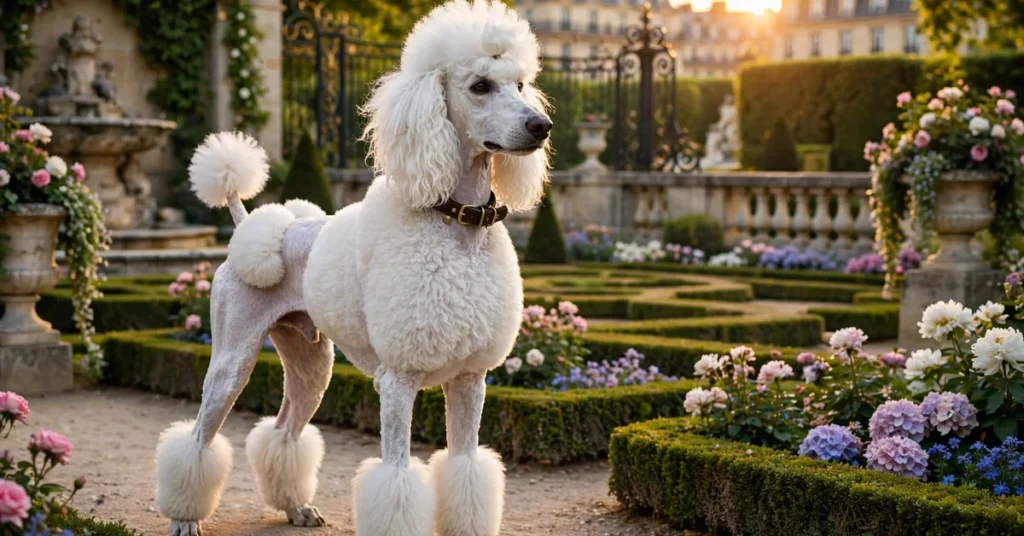
You have probably heard someone say french poodle and pictured a pampered dog with a fancy haircut riding in a Parisian handbag. That image is fun, but it misses the real story by a mile.
Here is the twist: there is no separate breed behind the nickname. It is simply a Poodle, one of the smartest and most athletic dogs on the planet.
Thinking about bringing one home? This guide covers the name myth, the three sizes, temperament, training, grooming, health, and real costs.
Table of Contents
Quick Answer: What Is a French Poodle?
A french poodle is simply a Poodle, the curly-coated breed France adopted as its national dog. It comes in three sizes, toy, miniature, and standard, and ranks among the smartest breeds in the world. Expect a low-shedding coat, 1 to 2 hours of daily activity, professional grooming every 4 to 6 weeks, and a dog that learns fast but gets bored faster. If you want a brilliant, athletic partner and can commit to the grooming bill, few breeds reward you more.
The French Poodle Name Myth, Cleared Up
The Poodle did not originate in France. It started in Germany as a water retriever, bred to splash into cold lakes and fetch ducks for hunters. The breed name comes from the German “pudelin,” meaning to splash about in water.
So where does France come in? French nobles fell in love with the breed and refined it for centuries until France declared it the national dog. In French it is called the “Caniche,” from “canard,” the word for duck. The French basically renamed Germany’s duck dog and claimed it with pride.
English speakers adopted the French nickname, and it stuck. But every kennel club registers one breed: the Poodle. No separate breed, no separate registry, no separate standard.
That history explains the dog. This was never a lapdog decoration but a working retriever, and that athletic, eager brain is still under the curls.
Toy, Miniature, or Standard: Picking Your Size
Every french poodle comes in one of three sizes, and size changes daily life more than almost anything else. Same breed, same brain, very different dog to live with.
The Standard Poodle stands over 15 inches tall and weighs 40 to 70 pounds. This is the original working size: athletic and powerful, built for hiking, swimming, and dog sports.
The Miniature Poodle stands 10 to 15 inches and weighs 10 to 15 pounds. The happy middle ground: sturdy enough for active play, small enough for apartment life.
The Toy Poodle stands under 10 inches and weighs 4 to 6 pounds. Delicate and charming, but do not mistake tiny for low maintenance. The Toy has the same big brain and needs the same training as its larger cousins.
Note: “teacup poodle” is a marketing term, not a real variety. It usually means undersized Toys with extra health risks. Stick to the three official sizes.
| Feature | Toy Poodle | Miniature Poodle | Standard Poodle |
|---|---|---|---|
| Height | Under 10 inches | 10 to 15 inches | Over 15 inches |
| Weight | 4 to 6 pounds | 10 to 15 pounds | 40 to 70 pounds |
| Best for | Apartments, gentle households | Families, first-time owners | Active owners, dog sports |
| Daily exercise | 30 to 45 minutes | 45 to 60 minutes | 1 to 2 hours |
| Grooming cost | Lower, smaller dog | Moderate | Highest, big coat to clip |
| Kid sturdiness | Fragile, older kids better | Sturdy for most kids | Very sturdy playmate |
| Lifespan | 14 to 18 years | 14 to 16 years | 11 to 13 years |
| Watch out for | Dental crowding, fragile bones | Weight gain sneaks up fast | Bloat risk, needs space |
All three sizes are shown and registered together as one breed. You can read the official Poodle breed standard on the AKC website for the full details on each variety.
Temperament: Brilliant, Proud, and Sensitive
A french poodle is brilliant first and everything else second. Stanley Coren’s famous ranking places the Poodle second in canine intelligence, behind only the Border Collie. These dogs do not just learn commands, they study you: your routines, your moods, your tone of voice.
That famous Poodle pride is real, but under it sits a sensitive heart. Harsh corrections crush them. One sharp word can shut a Poodle down for the whole session.
Here is what living with one feels like day to day:
- Velcro loyalty: Poodles bond hard with their people and want to be involved in everything you do.
- Aloof with strangers: a Poodle may watch newcomers coolly before deciding they are worth the effort.
- Playful well into old age: that puppy spark sticks around for years, especially in Minis and Toys.
- Alert barking: they notice everything and will tell you. Great watchdogs, so train a quiet cue early.
- Separation sensitivity: they hate long hours alone and need company and routine.
Miniatures and Standards are usually wonderful with kids: sturdy, patient, and playful. Toys suit older, gentle children. Early socialization makes them easy housemates with other pets.
The Coat Truth: Is It Really Hypoallergenic?
Poodles have hair, not fur. It grows continuously like human hair and sheds very little into your home, which makes them one of the best choices for allergy sufferers.
But be honest with yourself: no dog is 100 percent hypoallergenic. Allergens live in dander, saliva, and urine, not just shed hair. Poodles produce less airborne dander than heavy shedders, so many allergic owners do well with them, but severe sufferers should spend time around the breed first.
The low-shedding coat is why Poodles anchor so many “doodle” mixes. Breeders cross them with Labs and Goldens hoping to pass on the coat, but results vary. A purebred Poodle is the only way to know exactly what coat you are getting.
Poodles also come in many solid colors: black, white, apricot, silver, brown, and more. Color changes nothing about temperament or health, so pick the one you love looking at.
Exercise and Brain Work: A Busy Mind Needs a Job
Remember the duck dog history: this breed was built to work all day in cold water, and that engine is still under the hood. A bored Poodle is a destructive Poodle.
Standards need 1 to 2 hours of real activity daily, and swimming is their ancestral joy. Fetch, hiking, jogging, and agility all work beautifully. Minis need 45 to 60 minutes, Toys 30 to 45. Do not skip exercise just because the dog is small.
Brain work matters as much as leg work. Ten minutes of training tires a Poodle more than a half-hour walk. Try:
- Puzzle feeders and snuffle mats for meals
- Trick training: spin, bow, weave, close the door, put the toys away
- Nose work games: hide treats around the house and let them hunt
- Dog sports: agility, dock diving, and rally suit athletic Standards perfectly
Here is my trainer rule of thumb: a tired Poodle is a well-behaved Poodle, and mental tiredness counts double.
Training a Poodle: They Learn Fast and Get Bored Faster
Training a french poodle is one of the great joys of dog ownership. They pick up new commands in a handful of repetitions and genuinely enjoy showing off, which is why Poodles dominate obedience rings and once performed in circuses across Europe.
But that brilliant brain is a double-edged sword. Drill one command twenty times and your Poodle will check out or invent its own game out of sheer boredom. Keep sessions short, fun, and always changing.
What works:
- Positive reinforcement only: treats, praise, and play. They are too sensitive for harsh methods.
- Short sessions: 5 to 10 minutes, several times a day, always ending on a win.
- Variety: mix obedience, tricks, and games so the brain stays engaged.
- Early socialization: expose puppies to people, dogs, sounds, and places before 16 weeks.
What to watch for:
- Barking: teach “quiet” early, because alert Poodles love to announce things.
- Jumping up: excited greeters need a solid “four paws on the floor” rule from day one.
- Separation training: practice short absences early so alone time feels normal.
- Too much drilling: the classic Poodle problem is an owner who trains too much and plays too little. Balance both.
Grooming Reality: That Fancy Clip Is Functional
The continental clip was not fashion. Hunters shaved the Poodle’s body for fast swimming but left puffs of hair over the joints, chest, and kidneys to protect them from cold water. Every pom-pom had a job.
Pet Poodles do not need the show clip, but they do need regular grooming. The coat mats fast, and matting pulls painfully on the skin. Plan on:
- Professional grooming every 4 to 6 weeks
- Brushing 2 to 3 times a week at home between appointments
- Ear checks weekly: hair grows inside Poodle ears and traps moisture
- Dental care: especially for Toys, whose crowded teeth collect tartar fast
The popular pet alternative is the “puppy clip” or “teddy bear clip,” one even length all over. It is cute, practical, and much cheaper to maintain. Whatever style you choose, budget for it. Grooming is the real ongoing cost of this breed, and skipping it is not fair to the dog.
Health Issues Worth Knowing
Poodles are generally healthy, long-lived dogs, especially the smaller varieties. But the breed has known issues a good breeder screens for. The VCA’s Poodle breed health guide is an excellent reference to review with your vet.
- Hip dysplasia: mainly a Standard concern. Breeders should X-ray hips before breeding.
- Progressive retinal atrophy (PRA): an inherited eye disease. A simple DNA test screens for it.
- Epilepsy: seizure disorders appear in the breed. Ask the breeder about family history.
- Addison’s disease: an adrenal gland disorder Poodles are prone to. It is manageable once diagnosed.
- Bloat (gastric dilatation-volvulus): a life-threatening emergency in deep-chested Standards. Learn the warning signs.
- Luxating patella: slipping kneecaps, more common in Toys and Minis.
- Sebaceous adenitis: a skin condition seen in Standards that causes hair loss and scaly skin.
Ask any breeder for proof of hip, eye, and DNA testing before you pay a deposit. Health testing is the clearest line between a responsible breeder and a puppy mill.
What a Poodle Really Costs
Poodles are not a budget breed, and most of the cost is not the puppy. Be honest with your wallet before you fall in love.
- Purchase price: 1,000 to 3,000 dollars from a health-tested breeder. Standards and unusual colors cost more.
- Grooming: 50 to 120 dollars every 4 to 6 weeks, which adds up to 600 to 1,200 dollars a year.
- Food: 30 to 60 dollars a month depending on size and food quality.
- Vet care: budget 300 to 700 dollars a year for checkups, vaccines, and preventatives.
- Training: a puppy class runs 100 to 300 dollars and is money well spent with this breed.
Rescue is a wonderful alternative. Poodle rescues exist in nearly every state, and adult rescues often come house-trained with known personalities. Adoption fees usually run 200 to 500 dollars.
Is a French Poodle Right for You?
A Poodle might be your perfect match if you check most of these boxes:
- You want a genuinely smart dog and enjoy training as a hobby
- Someone is home much of the day, or you have a solid dog-care plan
- You can commit to grooming every 4 to 6 weeks, plus brushing at home
- You are active enough for daily walks, play, and brain games
- You want low shedding more than you want low maintenance
Think twice if:
- You want an independent dog that entertains itself
- You work 10-hour days with no walker and no plan
- The grooming bill makes you wince
- You want a quiet, low-energy couch companion
No shame in a no. The wrong brilliant dog is harder than the wrong average dog, because a bored genius will redesign your house from the inside.
Conclusion
The Poodle is so much more than the haircut stereotype suggests. Under those curls lives a brilliant, athletic, deeply loyal dog with the heart of a working retriever. It will learn your routines, read your moods, and keep you laughing for well over a decade.
Go in with open eyes: the grooming is real, the brain needs a daily job, and this dog wants your company, not your backyard. Meet those needs and you will understand why France fell in love centuries ago and never looked back.
Related Guides
- Smartest Dog Breeds: 15 Genius Pups Ranked (2026)
- Hypoallergenic Dog Breeds: 18 Low-Shedding Picks (2026)
- Small Dog Breeds: 15 Best Picks for Apartments, Families & First-Timers (2026)
- Cute Dog Breeds: 15 Adorable Picks for Every Home (2026)
- Fluffy Dog Breeds: 15 Cloud-Soft Cuddle Buddies (2026)
- Papillon Dog: Complete Guide
- Best Dog Breeds for Families: 12 Kid-Friendly Picks for Every Home (2026)
- Dog Names: 150+ Best Picks for 2026 (Male, Female & Unique)
- Black Poodle: 7 Stunning Facts About This Smart Breed (2026)
Frequently Asked Questions
Is there a difference between a poodle and a French poodle?
No, they are the same breed. French poodle is just an informal nickname for the Poodle, honoring the country that adopted it as the national dog. Kennel clubs around the world register only one breed: the Poodle, in toy, miniature, and standard sizes.
Are poodles good family dogs?
Yes, especially Miniatures and Standards. They are playful, patient, and sturdy enough for active kids. Toy poodles do better with older, gentle children because of their small, fragile size. All sizes need daily companionship and do poorly when left alone for long hours.
Do poodles shed?
Very little. Their hair-like coat grows continuously and sheds minimally, which is why they are a top pick for allergy sufferers. But no dog is fully hypoallergenic, since allergens also live in dander and saliva. Regular grooming keeps the coat healthy and your home nearly fur-free.
How long do poodles live?
Toy poodles live 14 to 18 years, Miniatures 14 to 16 years, and Standards 11 to 13 years. Smaller sizes generally outlive the larger ones. Keeping your dog lean, well groomed, and mentally active adds healthy years to that range.
Are poodles easy to train?
Yes, they are among the easiest breeds to train and rank second in canine intelligence. Most poodles learn a new command in just a few repetitions with positive reinforcement. The catch is that they get bored fast, so keep sessions short, fun, and varied.
Why do poodles have that funny haircut?
The classic clip was functional, not fashion. Hunters shaved the body for fast swimming but left puffs of hair over the joints and organs for warmth in cold water. Pet poodles today usually wear simpler puppy clips, but the fancy continental cut still honors that working history.