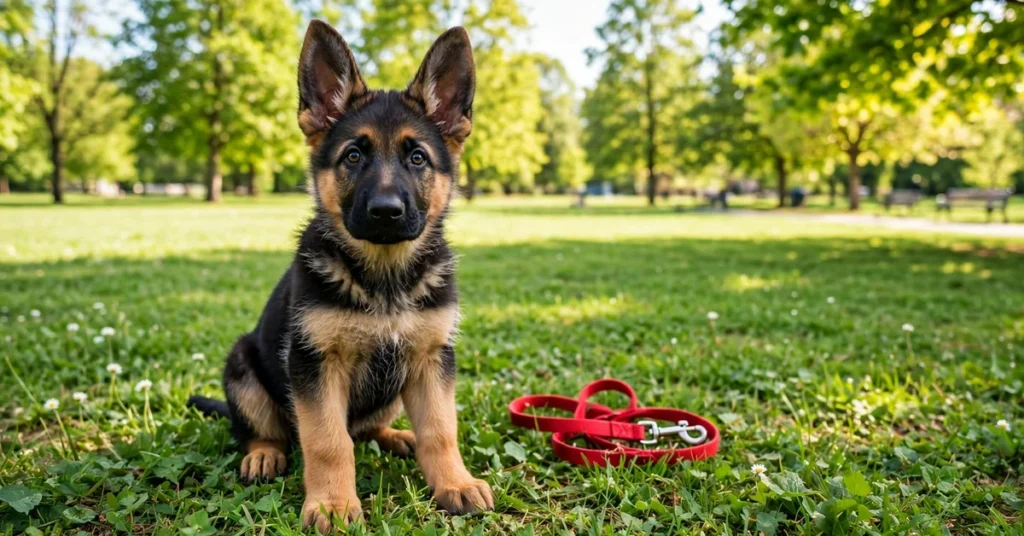
A German Shepherd puppy is not like other puppies. It is a future 85 pound working dog in a fluffy baby body.
These puppies are brilliant, intense, and mouthy. Raise a German Shepherd puppy right and you get the most loyal, capable dog on earth. Raise it wrong and you get a reactive 90 pound problem.
I am Marcus Reed, a certified dog trainer with 8 years of experience. German Shepherds are my most trained breed. Here is the honest month by month guide to year one.
Quick Answer: German Shepherd Puppy Essentials
Short on time? The critical facts.
Adult size: 50 to 90 pounds of muscle and brains.
Socialization window: Closes at 16 weeks. Miss it and you cannot get it back.
Training: Start day one. 5 to 10 minute sessions, multiple times daily.
Exercise: Short and controlled as a puppy. Joints are fragile until 18 months.
Biggest mistake: Under socializing. A fearful Shepherd becomes a reactive adult.
Now the full first year plan.
📋 Contents (click to open)
Months 2 to 3: Foundation and Fear Period
Your puppy comes home at 8 weeks. The next month shapes its entire temperament.
The Fear Period (8 to 12 Weeks)
Puppies go through a phase where scary experiences stick hard. A single bad fright now can create a lifelong fear. Keep new experiences positive and low pressure. If the puppy startles, act like nothing happened and move on.
Socialization Sprint
You have until 16 weeks to show your puppy the world is safe. Aim high:
- 100 different people: all ages, hats, beards, uniforms
- 50 different places: streets, parks, stores, cars, vet office (just for treats)
- All the sounds: traffic, vacuums, thunder recordings, construction
- Calm vaccinated adult dogs for polite play lessons
First Commands
Sit, down, come, and their name. Five minute sessions, three times a day. Use high value treats like tiny pieces of chicken. German Shepherd puppies learn fast, so keep it fun before they get bored.
Trainer secret: Hand feed half of every meal as training rewards. Your puppy learns that all good things come from working with you. This builds focus faster than anything else.
Months 4 to 6: Training and Teething
The land shark phase. Those needle teeth test everything, including your patience.
Surviving Teething
Redirect every bite to a toy. Yelp and withdraw attention for hard bites. Never punish biting with hitting. It creates hand shy, fearful dogs. Frozen carrots and rubber chew toys save furniture and fingers.
Leash Skills
A 40 pound puppy that pulls becomes an 85 pound dog that drags you. Teach loose leash walking now in low distraction areas. Reward every step at your side.
Place Training
Teach a solid go to your bed and settle. This one command prevents jumping on guests, counter surfing, and door dashing. Practice daily with increasing distractions.
Puppy Class
Enroll in a positive reinforcement puppy kindergarten. The structured socialization is irreplaceable for this breed.
The AKC puppy training guide covers year one care well, and the AKC German Shepherd page has the official breed standard.
Months 7 to 12: Adolescence Survival
Welcome to the teenage phase. Your obedient puppy may suddenly forget everything. This is normal. Do not panic.
- Regression is normal: Commands that were solid may fall apart. Go back to basics without frustration.
- Keep training: Daily sessions prevent bad habits from cementing. This is when most owners quit, and it shows.
- Increase challenge: Add distance, duration, and distractions to known commands.
- Second fear period: Around 8 to 10 months, some Shepherds get spooky again. Stay calm and positive.
- Exercise wisely: Still no forced running or jumping. Free play on grass is perfect.
The 18 Month Rule
No high impact exercise until 18 months. No jogging with you, no agility jumps, no frisbee leaps. Growth plates are still open and damage now means arthritis later. Patience pays off in a sound adult dog.
Protecting Growing Joints
German Shepherds have one of the highest hip dysplasia rates of any breed. Joint protection in puppyhood is the best investment you make.
| Age | Exercise Rule | Avoid | Do Instead |
|---|---|---|---|
| 2 to 4 months | 5 min per month of age, 2x daily | Stairs, slippery floors | Short grass play, training |
| 4 to 6 months | 20 to 30 min walks | Forced running, rough wrestling | Sniff walks, puzzle toys |
| 6 to 12 months | 30 to 45 min walks | Jumping, jogging, agility | Swimming, free play, training |
| 12 to 18 months | 45 to 60 min walks | Repetitive jumping | Hiking, advanced training |
| 18+ months | Full activity | Nothing specific | Running, sports, work |
Keep your puppy lean. You should feel ribs easily under a thin fat layer. Every extra pound stresses growing joints.
Feeding Your German Shepherd Puppy
Fast growing large breeds need the right fuel at the right speed.
- Large breed puppy food: Formulated with controlled calcium and phosphorus to prevent too rapid growth. This matters enormously for joint health.
- Three meals until 6 months: Then switch to two meals daily for life.
- Measured portions: Follow the bag guidelines for expected adult weight, then adjust by body condition. Do not free feed.
- Slow growth is good: A slightly lean puppy grows into a healthier adult than a chunky one. Resist the urge to fatten them up.
- Fresh water always: In a heavy tip proof bowl. These puppies drink a lot.
5 Mistakes German Shepherd Owners Make
1. Skipping socialization. The number one cause of reactive adult Shepherds. The window closes at 16 weeks forever.
2. Too much exercise too young. Forced running before 18 months damages joints permanently.
3. Harsh corrections. Shepherds are sensitive. Harsh methods create fear aggression, not respect.
4. No job to do. This is a working breed. Without mental work, they invent their own jobs, like redecorating your house.
5. Letting them get fat. Extra weight on a dysplasia prone breed is cruelty by kindness. Keep them lean.
Final Thoughts
A German Shepherd puppy is a full time project for the first year. It is also one of the most rewarding projects in the dog world.
Socialize relentlessly, train daily, protect those joints, and keep them lean.
Do that, and that mouthy little shark becomes the loyal, brilliant partner the breed is famous for.
Related Guides
- Black Lab: Complete Breed Guide, Temperament & Care
- Chocolate Lab Guide: 9 Facts Every Owner Must Know
- Best Dog Breeds for Families: 15 Kid-Friendly Picks
- Small Dog Breeds: 15 Best Picks for Apartments & Families
- French Bulldog Temperament: 12 Traits Every Owner Must Know
- Dog Treats: 9 Healthy Picks Every Dog Owner Must Try
- What Can Dogs Eat? 50+ Safe Foods and 15 Dangerous Ones
- Best Dog Foods for Sensitive Stomach: 10 Gentle Picks That Actually Help
Frequently Asked Questions
How much does a German Shepherd puppy cost?
A German Shepherd puppy usually costs between $1,000 and $2,500 from a responsible breeder. Show-quality pups from champion lines can cost $3,500 or more. Rescue organizations often have German Shepherd puppies for $200 to $500, which includes vaccines and spaying or neutering.
Are German Shepherd puppies good for first-time dog owners?
German Shepherd puppies can work for first-time owners, but they are a lot of dog. They need firm, consistent training from day one, plus plenty of exercise and mental work. If you are ready to commit time every single day, they will reward you with unmatched loyalty. If you want an easy, low-effort puppy, this is not the breed.
How much exercise does a German Shepherd puppy need?
A good rule is 5 minutes of exercise per month of age, twice a day. So a 4-month-old puppy gets about 20 minutes twice daily. Avoid long runs or hard jumping until your pup is at least 18 months old, because their growing joints are fragile. Short training games and sniff walks are perfect.
When do German Shepherd puppies calm down?
Most German Shepherds start settling down between 2 and 3 years old. The wild puppy phase usually peaks between 6 and 18 months. Daily training, enough exercise, and a clear routine speed things up a lot. A bored German Shepherd stays hyper far longer than a tired, well-trained one.
What should I feed my German Shepherd puppy?
Feed a high-quality large-breed puppy food that meets AAFCO standards. Large-breed formulas control growth speed, which protects your pup from joint problems later. Split meals into 3 portions a day until 6 months, then switch to twice daily. Ask your vet about the right portion size for your pup’s weight.
How do I stop my German Shepherd puppy from biting?
Puppy biting is normal, but those sharp teeth hurt. When your pup bites, yelp softly, stop playing for 10 seconds, then redirect to a chew toy. Never hit or yell, because that makes biting worse. Most German Shepherd puppies learn bite control by 5 to 6 months with consistent redirection.