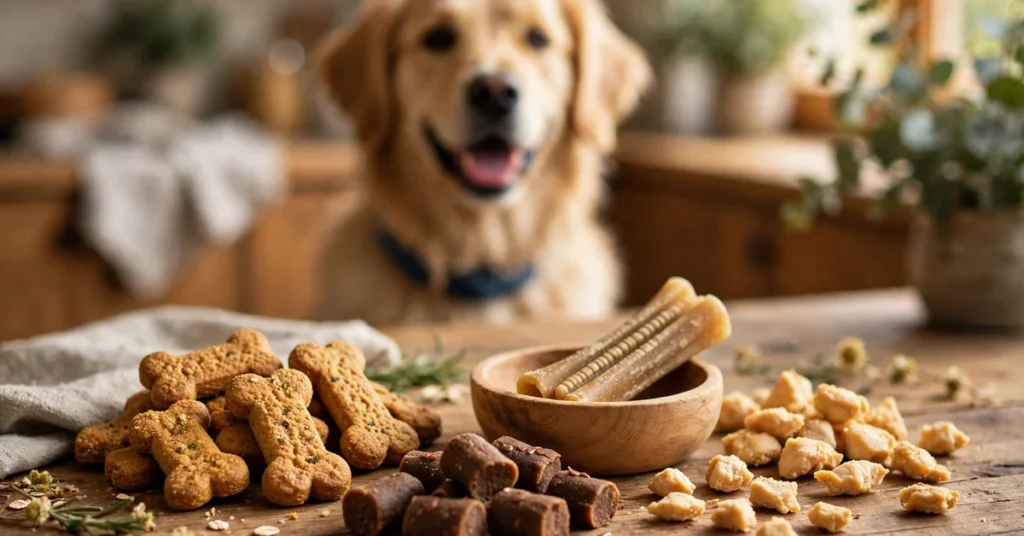
Your dog’s eyes light up the second they hear the treat bag crinkle, and honestly, mine would too. As a canine nutrition specialist, I can tell you that dog treats are one of the most powerful tools in your dog training kit. I am Emily Carter, a UC Davis animal science graduate, and I spend my days helping owners pick snacks that build health instead of adding empty calories.
The treat aisle at the pet store can feel overwhelming. Hundreds of bags, all promising “natural,” “premium,” and “vet approved.” Most owners grab the cutest bag and hope for the best. That guesswork costs dogs their health, one calorie at a time.
In this guide, I will show you exactly what makes a treat healthy, compare the four main treat types, reveal the ingredients to avoid, and share three simple homemade recipes. Let us start with the short answer.
Quick Answer
The best dog treats are small, low in calories, and made with real ingredients you recognize, like chicken, salmon, oats, or peanut butter. Keep all treats under 10% of your dog’s daily calories. For training, use tiny soft treats. For teeth, use dental chews. Avoid rawhide, treats with xylitol, and anything with vague ingredients like “meat by products” or added sugar.
Table of Contents
- Quick Answer
- What Makes a Dog Treat Healthy?
- The 4 Types of Dog Treats Compared
- Crunchy Biscuits
- Soft and Chewy Treats
- Freeze-Dried Treats
- Dental Chews
- Treat Types at a Glance
- How to Read a Treat Label Like a Nutritionist
- Picking the Best Treats for Training
- 8 Treats and Ingredients to Avoid
- 3 Simple Homemade Dog Treat Recipes
- Peanut Butter Banana Bites
- Salmon Sweet Potato Chews
- Frozen Yogurt Drops
- Conclusion
- Related Guides
- Frequently Asked Questions
What Makes a Dog Treat Healthy?
Healthy is not a marketing word. It is a checklist. Before any treat goes into my own dogs’ mouths, it has to pass these four rules.
- Real food first: The first ingredient should be something you recognize. Chicken, salmon, beef, oats, sweet potato, or peanut butter. If the first ingredient is “meat meal” or “animal digest,” put the bag back.
- Low calorie by design: A single treat should be under 10 calories for most dogs. Tiny training treats should be 1 to 3 calories. Big calorie treats add up shockingly fast.
- No red flag additives: Skip treats with xylitol, propylene glycol, BHA, BHT, ethoxyquin, added sugars, or artificial colors. Your dog does not care what color the treat is. Neither should you.
- Right size for the dog: A Great Dane and a Chihuahua should not eat the same treat. Big dogs need bigger treats so they do not swallow them whole. Small dogs need tiny pieces so they do not choke.
Nutritionist tip: Break every treat into the smallest useful piece. A biscuit snapped into four pieces is four rewards instead of one, with zero extra calories. Your dog counts rewards, not crumbs.
The 4 Types of Dog Treats Compared
Walk into any pet store and you will see hundreds of products, but they all fall into four main groups. Most dog treats you see on the shelf are one of these. Each type has a job it does best.
Crunchy Biscuits
Biscuits are the classic dog cookie. They are baked hard, they crunch, and most dogs love them. The crunching action helps scrape light plaque from teeth. They are also easy to break into smaller pieces for training.
The downside is calories. A single large milk bone can contain about 85 calories, a full meal’s worth of treats for a small dog. Check the calorie line and buy small or mini sizes.
Soft and Chewy Treats
Soft treats are the go-to for training. They are moist, smelly, and easy to chew fast, which keeps your dog focused on you instead of the snack. Small soft treats are the gold standard for training rewards.
The catch is that many soft treats rely on glycerin, sugar, and preservatives to stay moist. Look for ones made with real meat and no added sugar.
Freeze-Dried Treats
Freeze dried treats are single ingredient snacks like chicken breast, salmon, or beef liver with the water removed. This is the purest treat type you can buy. Nothing added, nothing hidden.
They break into tiny pieces easily, which makes them perfect for training. The only real downside is the price. You are paying for purity.
Dental Chews
Dental chews are designed to reduce plaque and freshen breath while your dog gnaws. They work best as a daily add on, not a replacement for brushing. Look for products with the VOHC seal, which means they have proven they reduce plaque or tartar.
Watch the calories here too. Some dental chews pack 50 or more calories each. Choose a size matched to your dog’s weight.
Treat Types at a Glance
Use this table to pick the right treat type for the job:
| Treat Type | Best For | Calorie Level | Watch Out For |
|---|---|---|---|
| Crunchy biscuits | Everyday rewards | Medium to high | Large biscuits hide big calories |
| Soft and chewy | Training sessions | Low to medium | Added sugar and glycerin |
| Freeze-dried | Sensitive stomachs, training | Low | Higher price per bag |
| Dental chews | Oral health | Medium | Size must match your dog |
How to Read a Treat Label Like a Nutritionist
You do not need a degree to read a treat label. You need thirty seconds and three checkpoints.
First, read the ingredient list. Ingredients are listed by weight, so the first three matter most. Real meat, real vegetables, real grains. If you cannot picture the ingredient in your kitchen, that is a warning sign.
Second, check the calories. Look for “calorie content” on the panel. Most brands also list calories per treat or per piece. If they do not, estimate and stay conservative.
Third, look at the guaranteed analysis. This shows protein, fat, fiber, and moisture percentages. Higher protein and lower fat is usually better. Very high fat treats can trigger pancreatitis in sensitive dogs if overused.
Key takeaway: Real first ingredient, low calories per treat, no red flag additives. Three checks, thirty seconds, and you will outsmart 90% of the treat aisle.
Picking the Best Treats for Training
The best dog treats for training follow one simple rule: small, soft, and smelly. During a training session you might reward your dog 50 times or more. That only works if each treat is tiny.
Think pea sized. A soft treat the size of your pinky nail delivers the flavor reward without filling your dog up. If your dog stops responding halfway through a session, the treats are too big.
Keep a treat hierarchy. Use everyday low calorie treats for easy commands your dog already knows. Save the high value treats, like real chicken or cheese, for hard new skills.
And here is a trick from my training days: you can use your dog’s own kibble as training treats. Just subtract the training kibble from their dinner bowl so the daily total stays the same.
8 Treats and Ingredients to Avoid
Not every treat on the shelf deserves your money. These eight are the ones I warn clients about most:
- Rawhide chews: Rawhide can swell in the stomach and pieces can block the intestines. Safer chew options include bully sticks, collagen sticks, or rubber chew toys.
- Treats with xylitol: Also listed as birch sugar, xylitol is extremely toxic to dogs. It hides in some peanut butters and sugar free products. Always read the label.
- Cooked bones: Cooked bones splinter into sharp pieces that can puncture the throat or intestines. Raw bones carry their own risks too. Stick with safe chews.
- Treats with chocolate: Chocolate contains theobromine, which dogs cannot process. Dark chocolate baking treats marketed for humans are the worst offenders near dogs.
- Treats with grapes or raisins: Even small amounts can cause sudden kidney failure in some dogs. Fruit flavored treats should never contain real grapes or raisins.
- Jerky treats from unknown sources: Jerky treats have been linked to kidney problems in dogs, especially products with unclear sourcing. Choose brands with transparent, traceable supply chains.
- Treats with propylene glycol: This chemical keeps treats soft but has been linked to health concerns. Glycerin based softness is a safer choice.
- Treats with BHA, BHT, or ethoxyquin: These artificial preservatives are unnecessary. Mixed tocopherols, which is vitamin E, preserves treats just fine.
If your dog eats a treat with xylitol, chocolate, grapes, or raisins, act fast. Note what they ate and how much, then call your vet or the ASPCA Animal Poison Control hotline at 1-888-426-4435 immediately. Do not wait for symptoms.
The veterinary experts at VCA Animal Hospitals remind owners that treats are not complete and balanced nutrition, so they should stay limited to 10% of daily calories. The American Kennel Club also keeps a helpful guide on choosing the best treats for your dog’s size and needs.
3 Simple Homemade Dog Treat Recipes
Homemade dog treats are cheaper, fresher, and you control every ingredient. You do not need to be a chef. These three recipes use ingredients you probably already have.
Peanut Butter Banana Bites
Mash one ripe banana and mix it with half a cup of xylitol free peanut butter and one cup of oat flour. Roll into pea sized balls and bake at 325°F for 12 minutes. Store in the fridge for up to one week.
Salmon Sweet Potato Chews
Slice one large sweet potato into thin coins and bake at 250°F for 3 hours, flipping halfway. For a protein boost, top each coin with a tiny flake of canned salmon in water, no salt added.
Frozen Yogurt Drops
Spoon plain unsweetened yogurt into a piping bag or zip bag with the corner snipped. Squeeze pea sized drops onto a lined tray and freeze for 2 hours. Skip this recipe if your dog is lactose intolerant.
Storage tip: Homemade treats have no preservatives, so they spoil faster. Refrigerate soft treats and use them within a week. Freeze extras in a zip bag for up to three months.
Conclusion
The short version: The healthiest dog treats are small, low calorie, and made from real ingredients. Use tiny soft treats for training, crunchy or dental treats for teeth, and keep everything under 10% of daily calories. Avoid rawhide, xylitol, and treats with mystery ingredients. When in doubt, make your own.
Treats are love in snack form, but love should not come with a vet bill. Pick your treats with the same care you pick your dog’s food, break them small, and watch your dog light up at training time. A healthy treat habit keeps the tail wagging for years.
Disclaimer: This article is for education only, not a substitute for veterinary advice. Talk to your own vet before changing your dog’s diet.
Related Guides
- What Can Dogs Eat? Complete Safe Foods List
- Can Dogs Have Cheese? Vet Answers
- Best Dog Foods for Sensitive Stomach
- My Dog Has Diarrhea: What to Do Right Now
- Dog Diarrhea: Causes, Remedies & When to Worry
- Best Dog Breeds for Families: 15 Kid-Friendly Picks
- Black Lab: Complete Breed Guide, Temperament & Care
- Dog Ear Infection Symptoms: 7 Warning Signs
Frequently Asked Questions
How many dog treats can I give my dog per day?
Follow the 10 percent rule: all treats combined should be no more than 10 percent of your dog’s daily calories. For a 30 pound dog, that is about 70 to 80 calories of treats per day. That equals roughly 8 to 10 small training treats or one large biscuit, not both.
What dog treats are best for training?
The best training treats are small, soft, and smelly, about pea sized, so your dog can eat them fast and stay focused. Freeze dried chicken, tiny soft meat treats, or bits of plain cooked chicken work best. Save high value treats like cheese for teaching difficult new skills.
Are rawhide treats safe for dogs?
Rawhide is not the safest choice. It can swell in the stomach and broken pieces can block the intestines, which sometimes needs surgery. Safer chew options include bully sticks, collagen sticks, beef tendons, or durable rubber chew toys. Always supervise your dog with any chew.
Can puppies eat dog treats?
Yes, puppies can have treats once they are eating solid food, usually around 8 weeks old. Choose treats made for puppies or break regular treats into tiny pieces. Use them mainly for training, keep portions small, and avoid anything hard that could damage puppy teeth.
What ingredients should I avoid in dog treats?
Avoid xylitol (also called birch sugar), chocolate, grapes and raisins, onions and garlic, propylene glycol, BHA, BHT, and ethoxyquin. Also skip treats with vague ingredients like meat by products, animal digest, or added sugar. The cleaner the label, the better the treat.
Can I give my dog homemade treats instead of store bought ones?
Yes, homemade treats are a great option because you control every ingredient. Simple recipes with peanut butter, banana, oats, sweet potato, or plain yogurt are safe and cheap. Store them in the fridge and use within a week since they have no preservatives. Check with your vet if your dog has food allergies.