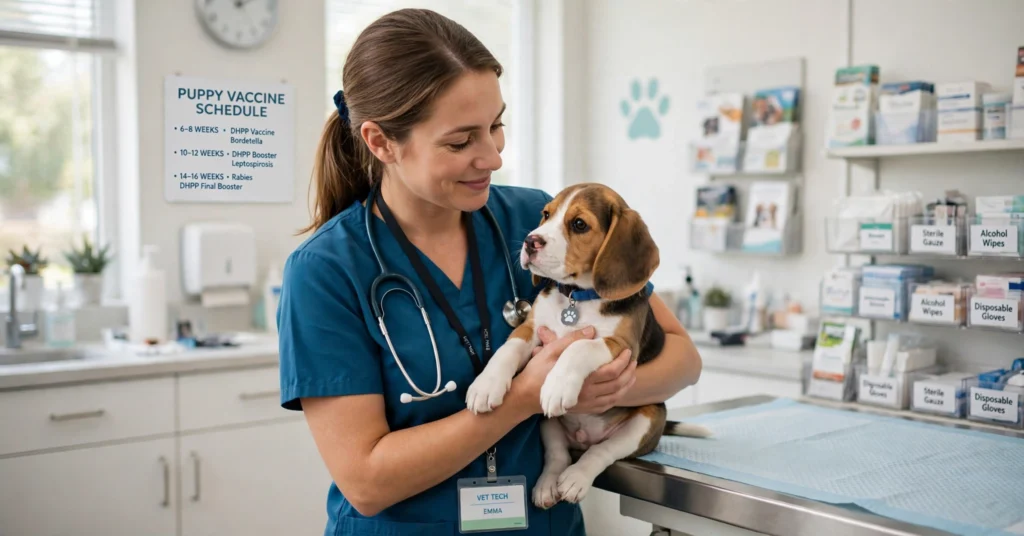
The needle is tiny. The worry is huge. I get it.
I am Sophie, a licensed vet tech. I have helped with over 5,000 puppy exams, and I can tell you this: the puppy vaccine schedule looks scary on paper, but each visit is quick and simple once you know what to expect.
This guide walks you through every visit, shot by shot. What your puppy gets, what it prevents, what side effects are normal, and what questions to ask. No medical jargon. Just clear answers from someone who does this every day.
Quick Answer: Puppy Vaccine Schedule
Short on time? Here is the schedule.
6 to 8 weeks: DHPP round 1 (distemper, adenovirus, parvovirus, parainfluenza).
10 to 12 weeks: DHPP round 2, leptospirosis round 1.
14 to 16 weeks: DHPP round 3 (final), leptospirosis round 2, rabies.
12 to 16 months: Booster round for DHPP, leptospirosis, and rabies.
Full protection kicks in about 2 weeks after the final shots. Want visit-by-visit details? Keep reading.
📋 Contents (click to open)
- Quick Answer: Puppy Vaccine Schedule
- Why Puppies Need a Series (Not One Shot)
- Visit by Visit: The Puppy Vaccine Schedule
- Core Vaccines Explained Simply
- Lifestyle Vaccines: Does Your Puppy Need Them?
- Side Effects: What Is Normal
- What Puppy Shots Cost
- Conclusion
- Related Guides
- Frequently Asked Questions
Why Puppies Need a Series (Not One Shot)
New puppy owners always ask me: why so many visits? Can we not just do it once?
Here is why. Puppies are born with temporary immunity from their mother’s milk. That protection fades at a different speed for every puppy, somewhere between 6 and 16 weeks. A single shot given too early gets blocked by mom’s antibodies. Given too late, it leaves a gap with no protection.
The series exists to close that gap. By repeating the shots every 2 to 4 weeks, we make sure at least one dose lands after mom’s protection fades and your puppy’s own immune system takes over.
What Happens If You Miss a Dose
Do not panic, and do not restart the whole series. In most cases your puppy simply picks up where they left off. Call your vet and rebook as soon as you can. Until the series is done, skip dog parks and unknown dogs.
Visit by Visit: The Puppy Vaccine Schedule
Here is exactly what happens at each appointment, based on the AAHA guidelines vets follow across the US.
| Age | Vaccines Given | What It Prevents |
|---|---|---|
| 6 to 8 weeks | DHPP, round 1 | Distemper, adenovirus, parvovirus, parainfluenza |
| 10 to 12 weeks | DHPP, round 2; leptospirosis, round 1 | Same four, plus leptospirosis |
| 14 to 16 weeks | DHPP, round 3 (final); leptospirosis, round 2; rabies | Same diseases, plus rabies |
| 12 to 16 months | DHPP booster, leptospirosis booster, rabies booster | Keeps protection strong into adulthood |
What Each Visit Feels Like
Visit 1 (6 to 8 weeks): Mostly a wellness check. The vet listens to the heart, checks the belly, and looks in the ears. The DHPP shot is one quick pinch between the shoulder blades. Most puppies barely notice. We also start deworming.
Visit 2 (10 to 12 weeks): Second DHPP plus the first leptospirosis shot. Your vet will ask about appetite, energy, and potty habits. This is a great visit to ask about teething and training.
Visit 3 (14 to 16 weeks): The big one. Final DHPP, second leptospirosis, and the rabies shot. Rabies timing follows your state law. After this visit, you are almost done.
Visit 4 (12 to 16 months): One booster round to lock in long-term immunity. After this, most core vaccines move to every 3 years.
Vet tech tip: Bring a list of questions to every visit. Ask about weight, food amounts, and anything odd you have noticed. There are no silly questions at a puppy visit. We would rather answer ten than miss one.
Core Vaccines Explained Simply
“Core” means every puppy needs these, no matter where they live.
DHPP: The Big Four in One Shot
- Distemper: attacks the lungs, gut, and brain. Often fatal. No cure, only prevention.
- Adenovirus: causes liver disease (hepatitis) and respiratory illness.
- Parvovirus: the one vets fear most. Severe vomiting and bloody diarrhea. Kills quickly without intensive care.
- Parainfluenza: one of the kennel cough viruses.
Leptospirosis
A bacterial infection from water or soil contaminated by wildlife urine. It can destroy the kidneys and liver, and it can spread to people. AAHA now lists it as core for all puppies.
Rabies
Fatal once symptoms appear. Required by law in most US states. Timing is set by your state, usually between 12 and 16 weeks.
For the complete age-by-age chart with costs, the AKC puppy shots guide follows the same AAHA guidelines and includes catch-up rules for adopted puppies.
Lifestyle Vaccines: Does Your Puppy Need Them?
“Non-core” does not mean unnecessary. It means your vet decides based on your puppy’s life.
- Bordetella (kennel cough): needed if your puppy will board, go to daycare, attend training class, or visit groomers.
- Canine influenza (dog flu): for social puppies in areas where it circulates. Many boarding places require it.
- Lyme disease: for puppies in tick-heavy regions. Pair it with tick prevention.
Ask your vet this exact question: “Based on where we live and what we do, which lifestyle vaccines does my puppy need?” That one sentence gets you a personalized plan.
Side Effects: What Is Normal
Most puppies feel almost nothing. But here is what to watch for so you do not worry unnecessarily.
Normal (gone within a day)
- Soreness or a small lump where the shot was given.
- Being a little sleepy or less hungry.
- Mild fever.
- Sneezing for a few days after intranasal vaccines.
Call Your Vet Right Away
Emergency signs: facial swelling or hives, repeated vomiting or diarrhea, trouble breathing, or collapse. Severe reactions usually strike within minutes to hours, which is why many clinics ask you to wait a few minutes after the shot.
Chewy’s puppy vaccine guide, reviewed by veterinarians, has a helpful section on after-care and when to call your vet.
What Puppy Shots Cost
At a private clinic, expect $20 to $60 per vaccine dose, plus an exam fee at each visit. Rabies runs about $20 to $30. A full first-year series usually lands in the low hundreds.
On a budget? Look into low-cost vaccine clinics, shelters, and community vaccine events. The protection is the same. Ask your vet for an itemized estimate at the first visit so nothing surprises you.
Conclusion
The puppy vaccine schedule looks like a lot. But each visit is short, and every shot is a layer of armor for your puppy.
Show up for the appointments. Ask your questions. And remember: about two weeks after the final shots at 16 weeks, your puppy is fully protected and ready for the big wide world.
From one vet tech to one puppy parent: you are doing great by reading this.
Related Guides
- How Much to Feed a Puppy: Simple Chart by Age and Size
- German Shepherd Puppy: Complete First Year Guide (2026)
- Best Puppy Food: 7 Smart Label Checks Before You Buy (2026)
- Dog Ear Infection Symptoms: 7 Warning Signs (2026)
- Dog UTI Symptoms: 10 Warning Signs and What to Do (2026)
- Dog Skin Allergies: Signs, Causes and 9 Relief Tips (2026)
- Dog Obedience Training: 5 Commands Every Dog Should Know
- Dog Names: 150+ Best Picks for 2026 (Male, Female & Unique)
Frequently Asked Questions
When do puppies get their first shots?
Puppies get their first DHPP shot at 6 to 8 weeks old. Boosters follow every 2 to 4 weeks until at least 16 weeks. Your vet sets the exact dates based on your puppy’s health and vaccine brand.
How many rounds of shots does a puppy need?
Most puppies get 3 rounds of DHPP between 6 and 16 weeks, 2 rounds of leptospirosis starting at 12 weeks, and 1 rabies shot. Then one booster round at 12 to 16 months.
What does DHPP stand for?
DHPP stands for distemper, hepatitis (adenovirus), parainfluenza, and parvovirus. It is one combination injection that protects against four serious diseases at once.
When can my puppy go outside after vaccinations?
Your puppy builds full protection about 1 to 2 weeks after the final shots at around 16 weeks. Until then, avoid dog parks and unknown dogs. Your own yard and brief outings on clean pavement are much lower risk.
Are puppy vaccine side effects normal?
Mild soreness, sleepiness, or a small appetite for a day is normal. Call your vet right away for facial swelling, hives, repeated vomiting, trouble breathing, or collapse. Severe reactions are rare but need fast treatment.
What if my puppy missed a vaccine dose?
Do not restart the series. Call your vet and rebook as soon as possible. In most cases your puppy picks up where they left off. Keep outings low-risk until the series is complete.