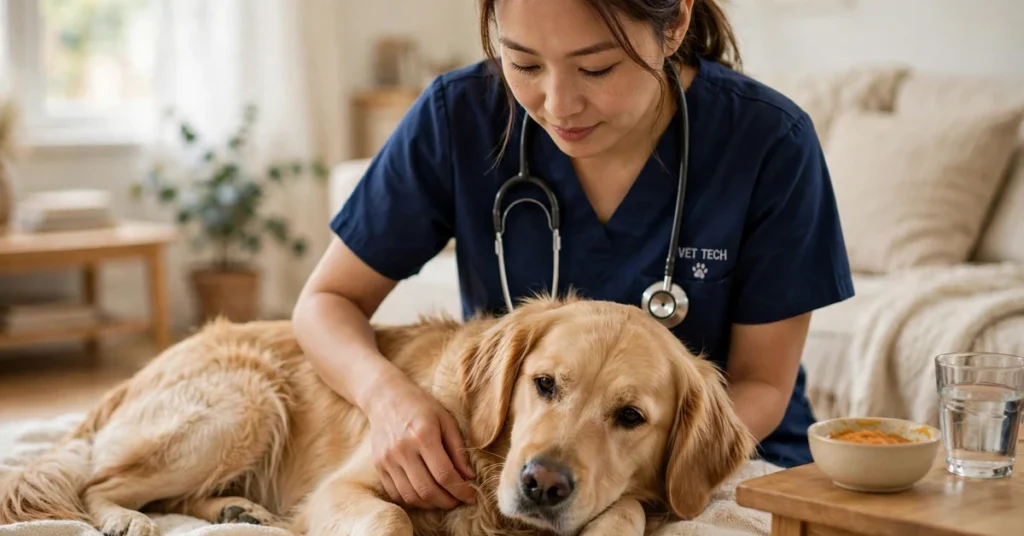
Nothing ruins a morning quite like dog diarrhea. I am Sophie, a licensed vet technician, and I have cleaned up more upset tummies than I can count, both at the clinic and at home with my own dogs.
Here is the reassuring truth: most of the time, dog diarrhea is your dog’s body doing exactly what it should, pushing out something that does not belong. And most mild cases clear up within 24 to 48 hours with simple home care.
But sometimes diarrhea is a warning light, not just a messy nuisance. My job in this guide is to teach you the same triage thinking I use at the clinic: when to stay calm, when to treat at home, and when to call the vet right now.
Quick Answer
Dog diarrhea is usually caused by something your dog ate, stress, or a quick diet change. If your dog is bright, eating, and drinking with no blood in the stool and no vomiting, you can try home care: offer small, frequent bland meals (plain boiled chicken and white rice), keep fresh water available, and add 1 to 4 tablespoons of plain canned pumpkin for fiber. Call your vet if you see blood, repeated vomiting, lethargy, no appetite, or diarrhea lasting more than 24 to 48 hours. Puppies, tiny breeds, and seniors need faster vet attention because they dehydrate quickly.
Contents
- Quick Answer
- What Dog Diarrhea Really Means
- When Dog Diarrhea Is an Emergency
- The Usual Suspects: What Causes It
- The 60 Second Home Triage
- Home Care for Dog Diarrhea: My 24 Hour Reset Plan
- What Your Vet Will Actually Do
- Keeping Diarrhea Away for Good
- Conclusion
- Related Guides
- Frequently Asked Questions
What Dog Diarrhea Really Means (It Is Not a Disease)
This is the first thing I tell every worried owner at the clinic: dog diarrhea is a symptom, not a disease. It is your dog’s gut saying, “Something is off down here, and I am flushing it out.”
That flush can be triggered by a hundred things, from a stolen sandwich to a serious infection. The stool itself gives us clues. Small, watery, large volume stools often point to the small intestine. Frequent, urgent, mucus covered stools with straining often point to the large intestine or colon. You do not need to diagnose this yourself, but noticing these details helps your vet a lot.
Why this matters: Knowing that diarrhea is a message changes how you respond. Instead of panicking, you become a detective. Your job is to read the clues, keep your dog comfortable, and decide whether the vet needs to join the case.
The single most important question is not “how bad is the poop?” but “how is my dog otherwise?” A bouncy dog who stole trash and has loose stool is a very different case from a flat, tired dog who will not eat.
Red Flags: When Dog Diarrhea Is an Emergency
Let me be direct, because this part saves lives. Some signs mean you skip home care entirely and call your vet or an emergency clinic right now.
Go to the vet NOW if you see any of these:
- Blood in the stool, bright red or dark and tarry like coffee grounds
- Vomiting plus diarrhea together, especially more than twice in 24 hours
- Pale, white, or gray gums, a sign of blood loss or shock
- Extreme tiredness, weakness, or collapse
- A swollen, hard, or painful belly
- Known toxin or foreign object, such as rat poison, medications, or a swallowed toy
- An unvaccinated puppy with diarrhea, which can signal parvovirus
This virus deserves special attention. The American Kennel Club notes that parvo is a potentially lethal infection that needs immediate veterinary care, and it often shows up as diarrhea in puppies. If your puppy has loose stool and has not finished vaccinations, treat it as urgent.
Who Needs Faster Attention
Some dogs have less margin for error. Puppies, tiny breeds, seniors, diabetic dogs, and dogs with chronic illness dehydrate and crash much faster than a healthy adult dog. For them, my rule is simple: when in doubt, call sooner rather than later. Your vet would always rather hear “it turned out to be nothing” than “we waited too long.”
The Usual Suspects: What Causes It
At the clinic, I group causes into two buckets: simple and common, and worth investigating. Almost everything falls into one of these.
The Simple, Common Ones
- Dietary indiscretion. The classic. Garbage raids, rich table scraps, or a whole stick of butter from the counter. Dogs are fearless eaters and their guts pay the price.
- Sudden food changes. Switching kibble overnight shocks the gut. This is the number one cause I see in new puppy owners.
- Stress. Moving house, boarding, fireworks, a new pet. Just like people, dogs can get an upset stomach from nerves.
- Too many treats. Those cute puppy eyes work, and owners cave. Rich treats in big amounts mean loose stools the next morning.
The Ones Worth Investigating
- Intestinal parasites. Giardia, roundworms, hookworms, and whipworms are all common, especially in puppies. A simple stool test at the vet finds them.
- Infections. Parvovirus and distemper in unvaccinated dogs, or bacterial infections from contaminated water or raw food.
- Ingredient sensitivities. Some dogs react badly to certain ingredients, and the gut takes the hit even when the skin looks fine.
- Medications. Some antibiotics and other drugs upset the stomach as a side effect.
- Pancreatitis and organ disease. Diarrhea can be a sign of pancreatitis, which the AKC flags as a life threatening condition, or of liver or kidney trouble in older dogs.
Key takeaway: If a simple cause fits (new food, trash raid, stressful weekend) and your dog feels fine otherwise, home care is reasonable. If no simple cause fits, or the diarrhea keeps returning, your vet needs to investigate.
The 60 Second Home Triage
This is the exact decision system I teach new pet parents. Look at your dog, not just the poop, and find your zone.
| Status | What You See | What To Do |
|---|---|---|
| Green: Home Care | Bright and playful, eating and drinking normally, soft to loose stool, no blood, no vomiting | Bland diet, pumpkin, watch for 24 to 48 hours |
| Yellow: Call the Vet Today | Diarrhea lasting more than 24 to 48 hours, reduced appetite, mild tiredness, puppy or senior dog, mild dehydration (tacky gums) | Call your vet the same day for advice and possibly an exam |
| Red: Vet Now | Blood in stool, vomiting plus diarrhea, collapse or extreme lethargy, pale gums, swollen painful belly, suspected toxin, unvaccinated puppy | Emergency vet visit immediately, do not wait |
Vet tech tip: Take a quick photo of the stool before you clean up. I know, gross. But that photo helps your vet enormously if things escalate, and it saves you from trying to describe colors and textures over the phone.
Home Care for Dog Diarrhea: My 24 Hour Reset Plan
Green zone? Great. Here is the plan I have used for years, at the clinic and with my own dogs. It is simple, gentle, and it works.
Step 1: Keep the Water Coming
Diarrhea drains fluids fast. Always keep fresh water available. Watch for dehydration: gently lift the skin on your dog’s back. If it snaps back quickly, hydration is fine. If it stays tented or the gums feel dry and sticky, that is dehydration, and you should call your vet.
Step 2: Switch to a Bland Diet
For 24 to 48 hours, skip the regular food and feed a bland diet. The classic recipe: 3 parts plain white rice to 1 part boiled skinless chicken breast. No skin, no bones, no seasoning, no butter.
Feed small amounts every 3 to 4 hours instead of two big meals. Small meals are easier on an irritated gut. If your dog will not eat the chicken and rice, try plain boiled lean ground turkey or low fat cottage cheese with rice.
Step 3: Add Pumpkin
Plain canned pumpkin is my favorite home remedy. The AKC explains that pumpkin’s soluble fiber absorbs water and adds bulk to the stool, and it also acts as a prebiotic that feeds good gut bacteria. Add 1 to 4 tablespoons to your dog’s meal, starting with the smaller amount.
Important: use plain canned pumpkin only. Never use pumpkin pie mix, which can contain xylitol, a sweetener that is toxic to dogs. For the full breakdown of amounts and how pumpkin works, see the AKC’s guide to pumpkin for dog diarrhea.
Step 4: Rest the Routine
Skip the long run and the dog park for a day or two. Gentle walks only, so your dog can toilet as needed. Keep stress low and keep the routine calm. A quiet day helps the gut settle.
Step 5: Transition Back Slowly
Once stools are firm for a full day, mix the bland food with regular food over 3 to 4 days, gradually increasing the regular food. Jumping straight back to normal kibble often restarts the whole problem.
Do NOT give human diarrhea medications without asking your vet. The AKC’s veterinary advisors warn that most human medications are ineffective for dogs, and some can be harmful. What helps you can hurt them. Always check with your vet first.
What Your Vet Will Actually Do
Many owners delay the vet visit because they imagine the worst. Let me pull back the curtain. A diarrhea workup is usually straightforward.
- History and exam. Your vet will ask about food, trash access, vaccines, and how your dog is acting, then do a hands on belly check.
- Fecal test. You bring a fresh stool sample, they check it for parasites. This catches the most common treatable cause.
- Blood work. For ongoing or severe cases, blood tests check organs, hydration, and infection.
- Imaging. X-rays or ultrasound if a blockage or foreign object is suspected.
Treatment depends on the cause: dewormers for parasites, fluids for dehydration, anti nausea medication, or a prescription diet. Most dogs bounce back quickly once the real cause is treated. The AKC’s full guide to dog diarrhea walks through these diagnostics in detail if you want to read more before your visit.
Keeping Diarrhea Away for Good
An ounce of prevention really is worth a pound of cure here. Most repeat cases I see come from the same few avoidable triggers.
- Transition foods slowly. Mix the new food with the old over 7 to 10 days. No sudden swaps, ever.
- Secure the trash. A locking bin is the cheapest diarrhea insurance you will ever buy.
- Limit rich table scraps. Fatty foods are a top trigger for painful pancreatitis, not just loose stool.
- Stay current on vaccines and deworming. Parvo and parasites are preventable. Annual stool tests catch worms before they cause trouble.
- Manage stress. Keep routines steady during moves, travel, or new pets. A calm dog has a calm gut.
Vet tech tip: If your dog has a sensitive stomach in general, not just the occasional bad day, a food built for gentle digestion can make a huge difference. Our guide to the best foods for sensitive stomachs covers what to look for and which formulas vets trust.
Conclusion
Dog diarrhea is messy, stressful, and almost always survivable with the right response. Remember my three rules: look at the dog, not just the poop; bland and boring wins at home; and blood, vomiting, or a flat tired dog means the vet, now.
You know your dog better than anyone. If something feels wrong, trust that feeling and call your vet. We would always rather reassure you over the phone than treat a crisis that waited too long. Your dog is lucky to have someone who cares enough to read a whole guide about their tummy.
Related Guides
- 9 Vet Tips to Calm the Tummy
- Dog Vomiting: When to Worry and What to Do (Vet Guide)
- Dog Ear Infection: 7 Symptoms, Causes and Safe Treatment
- Dog Dental Care: The 2-Minute Brushing Routine That Works
- Dog Allergies: Symptoms, Causes & Treatment Guide
- Can Dogs Eat Watermelon? Safe Summer Treats & Serving Tips
- Can Dogs Eat Tomatoes? Ripe vs Green Safety Guide
- Can Dogs Eat Strawberries? Vet’s Safe Feeding Guide 2026
How long does dog diarrhea usually last?
Mild dog diarrhea usually clears up within 24 to 48 hours with bland home care. If it lasts longer than 48 hours, keeps coming back, or your dog is getting worse, call your vet. Puppies and seniors should be seen sooner because they dehydrate faster.
Can I give my dog Imodium or Pepto Bismol for diarrhea?
Do not give your dog human diarrhea medications without asking your vet first. Veterinary experts warn that most human medications are ineffective for dogs and some can be harmful. Safe home care means a bland diet of boiled chicken and rice, plenty of water, and plain canned pumpkin.
Is pumpkin good for dog diarrhea?
Yes, plain canned pumpkin is one of the best home remedies for mild dog diarrhea. Its soluble fiber absorbs water and adds bulk to the stool, and it acts as a prebiotic that feeds healthy gut bacteria. Add 1 to 4 tablespoons to meals, starting small. Never use pumpkin pie mix, which may contain xylitol, a sweetener that is toxic to dogs.
Should I withhold food if my dog has diarrhea?
For diarrhea without vomiting, do not withhold food. Feed small, frequent bland meals of boiled chicken and white rice every 3 to 4 hours. Withholding food is sometimes advised when vomiting is also happening, but check with your vet for guidance in that case.
Why does my dog have diarrhea but seems fine otherwise?
A bright, playful dog with loose stool most likely ate something odd, had a sudden food change, or is stressed. Short term digestive upset can happen without serious illness. Keep up bland home care, watch closely, and call your vet if diarrhea lasts more than 48 hours or any new symptom appears.
When should I call the vet about my dog’s diarrhea?
Call your vet right away if you see blood in the stool, vomiting along with diarrhea, extreme tiredness, pale gums, a swollen painful belly, or a suspected toxin or swallowed object. Also call if diarrhea lasts more than 24 to 48 hours, or sooner for puppies, tiny breeds, seniors, or diabetic dogs.