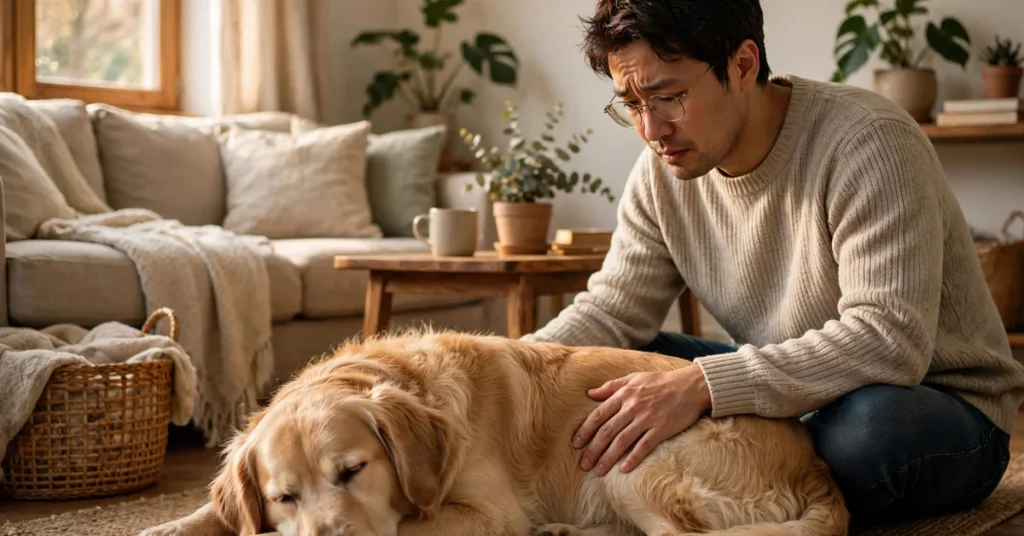
If you just typed “my dog has diarrhea” into Google, probably while staring at a mess in the yard, take a deep breath. You are not alone, and in most cases this is not an emergency.
Diarrhea is one of the top reasons dog owners call a vet clinic. It looks alarming, it smells terrible, and it always seems to strike at the worst possible moment. But most bouts are mild, and they clear up within a day or two with simple care at home.
I am Sophie Bennett, a licensed veterinary technician with six years of experience in small animal practice. Below I will walk you through the most common causes, exactly what to do during the first 24 hours, what to feed while the gut recovers, and the red flags that mean it is time to call your vet.
Quick Answer
If my dog has diarrhea, the first thing I do is check how he is acting overall. If he is bright, drinking water, and has no vomiting, blood in the stool, or belly pain, I withhold food for 12 hours (healthy adult dogs only, never puppies), offer small amounts of water often, and then feed small bland meals for a few days. Call your vet right away if you see blood, repeated vomiting, extreme tiredness, or signs of dehydration.
Table of Contents
- Quick Answer
- Common Causes
- Diet Related Causes
- Infections and Parasites
- Stress and Other Triggers
- Home Care: The First 24 Hours
- What to Feed During Recovery
- Red Flags: When to Call the Vet
- Mild vs Serious: A Quick Comparison
- How to Prevent Diarrhea in the Future
- Conclusion
- Frequently Asked Questions
- Related Guides
My Dog Has Diarrhea: Common Causes
Most cases fall into one of three groups: something he ate, an infection or parasite, or stress and other body triggers. Figuring out which group fits your dog helps you decide what to do next.
Diet Related Causes
This is the number one cause, and also the best case scenario. Common culprits include:
- A sudden food change. Switching kibble overnight shocks the gut. Always transition over 7 to 10 days.
- Table scraps and rich foods. Fatty meats, butter, and greasy leftovers are classic triggers.
- Garbage raiding. Dogs are proud trash divers, and spoiled food upsets the stomach fast.
- Too many treats or a new chew. Even good treats cause trouble in large amounts.
- Food intolerance or allergy. Some dogs react to specific proteins like chicken or dairy. If loose stools keep coming back, this is worth investigating with your vet.
Infections and Parasites
When diet is not the cause, tiny invaders often are. Intestinal parasites like roundworms, hookworms, giardia, and coccidia are extremely common, especially in puppies and rescues. Bacterial infections can come from raw meat or contaminated water. Viruses such as parvovirus cause severe, often bloody diarrhea in unvaccinated puppies and need emergency care.
For a deeper medical overview, VCA Hospitals explains the medical causes of diarrhea in dogs in clear, plain language.
Stress and Other Triggers
A dog’s gut and brain are closely linked. Boarding, moving house, fireworks, a new baby, or a new pet in the home can all bring on a bout of loose stools. Medications, especially antibiotics, commonly upset the stomach too. Less often, toxins (like xylitol or certain plants) or chronic diseases of the liver, kidneys, or pancreas are behind diarrhea that keeps returning.
Home Care: What to Do in the First 24 Hours
If your dog is otherwise acting normal, you can safely start with home care. Follow these steps in order.
1. Assess your dog. Check energy, appetite, and water intake. Look for vomiting, blood in the stool, or a painful, swollen belly. Lift the lip: gums should be pink and moist, not dry or pale.
2. Rest the gut. Withhold food for about 12 hours for a healthy adult dog. Never fast puppies under six months, tiny breeds, seniors, or diabetic dogs, because their blood sugar can drop dangerously low. When in doubt, skip the fast and call your vet.
3. Offer water in small amounts, often. A little water every 30 minutes beats a full bowl all at once. Ice chips work well for dogs that gulp.
4. Keep notes. How often is he going? What does it look like? Any mucus or blood? Your vet will ask these questions, and details help a lot.
5. Keep him calm and close to home. Many owners ask me, “my dog has diarrhea, should I still take him for a walk?” Short answer: skip the long walk and stick to quick, calm potty breaks until stools firm up.
My Dog Has Diarrhea: What to Feed During Recovery
After the short fast, reintroduce food slowly with a bland diet. The classic recipe is simple:
- Plain boiled chicken breast (no skin, no seasoning) mixed with plain white rice, about one part chicken to two parts rice.
- Plain boiled ground turkey works too. A spoonful of plain canned pumpkin (not pie filling) adds gentle fiber that helps firm stools.
Feed small meals four to six times a day instead of one or two big ones. After my dog has diarrhea, I never jump straight back to full kibble, because that often brings the problem right back. Once stools look normal for a full 24 hours, mix the regular food back in gradually over three to five days.
Avoid these until recovery is complete: dairy products, fatty or fried foods, rawhide and rich chews, new treats, and table scraps. Keep it boring. Boring is what heals the gut.
Red Flags: When to Call the Vet
Home care is for mild cases only. Call your vet promptly if you notice any of these:
- Blood in the stool, bright red or dark and tarry.
- Repeated vomiting, or vomiting combined with diarrhea. If vomiting is part of the picture, VCA Hospitals explains when vomiting in dogs needs urgent care.
- Extreme tiredness, weakness, or collapse.
- Signs of dehydration: dry or tacky gums, sunken eyes, or skin that stays tented when gently pinched.
- Belly pain or bloating, or whining when the belly is touched.
- Refusing water, or not drinking for more than 12 hours.
- Diarrhea lasting more than 24 to 48 hours, or coming back again and again.
- Puppies, seniors, or unvaccinated dogs, who can go downhill fast.
- Possible poisoning, such as chocolate, xylitol, rat bait, or unknown pills.
A quick note: this article is general information only and is not a diagnosis. Every dog is different, so when in doubt, call your vet. That phone call is free, and it is always worth making.
Mild vs Serious: A Quick Comparison
Still unsure which camp your dog falls into? This table sums it up at a glance.
| Sign | Mild: Monitor at Home | Serious: Call the Vet |
|---|---|---|
| Energy | Normal and playful between episodes | Lethargic, weak, or collapsing |
| Appetite | Still interested in food and treats | Refuses food for more than 24 hours |
| Vomiting | None, or vomited just once | Repeated vomiting, cannot keep water down |
| Stool | Soft or watery, no blood | Blood (red or dark and tarry), heavy mucus |
| Duration | Improving within 24 to 48 hours | Longer than 48 hours, or keeps returning |
| Hydration | Drinking normally, gums pink and moist | Dry or tacky gums, sunken eyes, skin tents up |
| Belly | Comfortable, no swelling | Painful, bloated, or tender to touch |
| Risk factors | Healthy adult, vaccinated | Puppy, senior, unvaccinated, or possible toxin eaten |
How to Prevent Diarrhea in the Future
Once the crisis passes, a few simple habits keep it from coming back:
- Transition foods slowly, over 7 to 10 days, mixing in a little more of the new food each day.
- Secure the trash and keep counters clear. Most garbage raids are preventable.
- Limit table scraps, especially fatty or spicy foods.
- Keep deworming and fecal tests on schedule. Parasites are a top cause of recurring diarrhea.
- Stay current on vaccines, especially for puppies.
- Consider probiotics during stressful events or antibiotic courses, with your vet’s okay.
- Provide clean, fresh water and wash food and water bowls daily.
Conclusion
Diarrhea is messy and stressful, but most cases are mild and short lived. Rest the gut, keep water coming in small amounts, feed bland meals, and watch closely for red flags. The next time you catch yourself thinking “my dog has diarrhea,” you will have a calm, clear plan instead of panic.
And remember: you know your dog better than anyone. If something feels off, trust that instinct and call your vet. It is always better to ask about a mild case than to wait on a serious one.
Related Guides
- Dog Diarrhea: Causes, Treatment, and Home Care
- Dog Vomiting: When to Worry and What to Do
- Best Dog Food for Diarrhea
- Best Probiotics for Dogs
- Dog Allergies: Signs and Relief
- Best Dog Food for Sensitive Stomach
- Dog UTI Symptoms: What to Watch For
- Dog Ear Infection: Signs and Treatment
What can I give my dog for diarrhea?
For mild cases, the safest home treatment is a short fast (about 12 hours for healthy adult dogs) followed by small bland meals of boiled chicken and white rice. Plain canned pumpkin, not pie filling, can help firm stools thanks to its soluble fiber. Do not give human anti diarrhea medicine unless your vet specifically tells you to, because the wrong product or dose can be dangerous.
How long does dog diarrhea last?
Most mild bouts clear up within 24 to 48 hours with bland food and rest. If it lasts longer than two days, keeps coming back, or your dog seems to be getting worse instead of better, call your vet. Puppies, seniors, and small breeds should be seen sooner because they dehydrate faster.
When should I worry about my dog’s diarrhea?
Worry when you see blood in the stool, repeated vomiting, extreme tiredness, belly pain, or signs of dehydration like dry gums and sunken eyes. Also call your vet if your dog is very young, very old, unvaccinated, has a chronic illness, or may have eaten something toxic. Trust your gut: if something feels wrong, make the call.
Should I feed my dog if he has diarrhea?
For a healthy adult dog, skipping food for about 12 hours gives the gut a chance to settle, then offer small bland meals several times a day. Puppies, tiny breeds, seniors, and diabetic dogs should not be fasted, so call your vet for guidance instead. Always keep fresh water available, offered in small amounts often.
What does bloody diarrhea in dogs mean?
Bright red blood usually comes from irritation in the lower bowel and can happen with straining, while dark, tarry stool suggests bleeding higher up in the digestive tract. Small streaks with otherwise normal behavior can be mild, but large amounts of blood, or blood combined with vomiting or lethargy, need a vet visit promptly.
Can stress cause diarrhea in dogs?
Yes. Boarding, moving house, fireworks, a new pet, or any big change in routine can upset a sensitive stomach. Stress related diarrhea is usually mild and clears up in a day or two once the dog settles. If it does not improve, or other symptoms appear, check with your vet to rule out a medical cause.