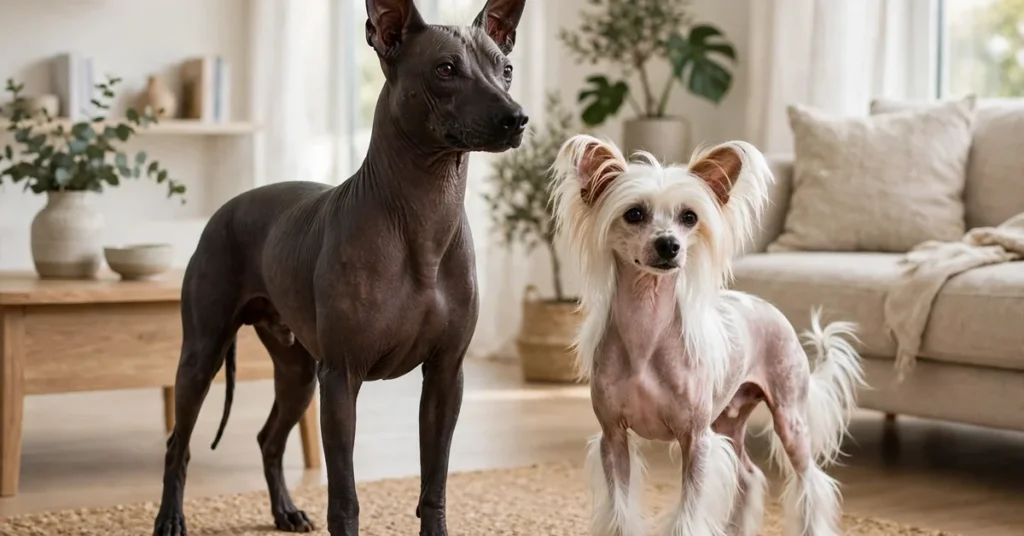
No fur. No shedding on your couch. A dog you can wipe clean with a cloth.
Sounds perfect, right? Hairless dog breeds are fascinating, ancient, and honestly adorable. But no fur does not mean no work.
I am Marcus Reed, a certified dog trainer with 8 years of experience. I have worked with Xolos and Chinese Cresteds, and I will tell you straight: these dogs trade grooming for skincare.
This guide covers every hairless dog breed, the real care routine, and the allergy myth you need to hear.
Quick Answer: Hairless Dog Breeds
Short on time? Here are the 4 recognized hairless dog breeds.
Most popular: Chinese Crested. Tiny, affectionate, great for apartments.
Most ancient: Xoloitzcuintli. Mexico’s 3,000 year old national dog.
Best for active families: American Hairless Terrier. Playful, smart, fully smooth.
Most elegant: Peruvian Inca Orchid. A sighthound with delicate skin.
The catch: no fur means sunscreen, sweaters, and weekly baths. Keep reading for the full care truth.
📋 Contents (click to open)
- Why Some Dogs Have No Fur
- The 4 Hairless Dog Breeds Explained
- Rare Hairless Dogs You Will Probably Never Meet
- Hairless Dog Skin Care: The Real Routine
- Skin Problems to Watch For: Acne, Blackheads and Dry Patches
- The Allergy Myth About Hairless Dogs
- Do Hairless Dogs Smell?
- Costs and Finding a Breeder
- Conclusion
- Related Guides
- Frequently Asked Questions
Why Some Dogs Have No Fur
Hairlessness comes from genetics, not shaving. Two different genes cause it.
Most hairless breeds carry a mutation in the FOXI3 gene. It is dominant, so one copy makes a dog hairless. This gene also affects teeth, so these dogs often have missing or oddly shaped teeth.
The American Hairless Terrier is the exception. Its hairlessness comes from a recessive SGK3 gene. These dogs are born with light fuzz that falls out in the first weeks, and their teeth are normal.
Fun fact: hairless and coated puppies are often born in the same litter. A Chinese Crested Powderpuff (fully coated) and a hairless sibling can be littermates.
The 4 Hairless Dog Breeds Explained
Only four hairless dog breeds are fully recognized. Here is each one, honestly described.
Chinese Crested (8 to 12 lbs)
The most popular hairless dog in the world. Silky tufts on the head, feet, and tail. The Powderpuff variety is fully coated. Affectionate, playful, and glued to their person. Perfect for apartments and seniors. Prone to dental issues, so brush those teeth daily.
Xoloitzcuintli (10 to 55 lbs)
Pronounced show-low-eats-QUEENT-lee. Called Xolo for short. One of the oldest dog breeds on earth, sacred to the Aztecs. Comes in toy, miniature, and standard sizes. Calm, loyal, and naturally reserved with strangers. Needs an owner who understands wary dogs.
American Hairless Terrier (12 to 28 lbs)
America’s own hairless breed, developed from Rat Terriers in Louisiana in 1972. Completely smooth skin, no tufts. Pure terrier personality: curious, quick, and energetic. The most beginner friendly hairless breed. Great for active first time owners.
Peruvian Inca Orchid (8.5 to 55 lbs)
Peru’s national dog, elegant like a sighthound. Sensitive, fast, and independent with a strong prey drive. Beautiful but demanding. Best for experienced owners without small pets.
| Breed | Size | Lifespan | Energy | Best For |
|---|---|---|---|---|
| Chinese Crested | Small | 13 to 18 years | Moderate | Apartments, seniors, families |
| Xoloitzcuintli | Toy to standard | 13 to 18 years | Moderate | Loyal companion seekers |
| American Hairless Terrier | Small | 14 to 16 years | High | Active families, beginners |
| Peruvian Inca Orchid | Small to large | 12 to 14 years | Moderate to high | Experienced owners |
Rare Hairless Dogs You Will Probably Never Meet
Beyond the big four, a handful of hairless dogs exist in small pockets of the world. None are recognized by the AKC, most are vanishingly rare, and all of them fascinate breed historians.
The Argentine Pila comes from Argentina, in toy, small, and medium sizes, sometimes with a tuft of hair on the head and tail. The Hairless Khala of Bolivia looks like a close cousin of the Xolo, in a taller sighthound type and a shorter legged type.
The Ecuadorian Hairless Dog may be the rarest of all, a long legged dog from coastal Ecuador that is often missing some of its premolar teeth. The Abyssinian Sand Terrier from Africa, with its little head tuft, may already be extinct, with no confirmed purebreds in decades. India’s Jonangi makes most lists too, thanks to a coat so short and glossy it looks hairless at a glance.
And the “hairless Chihuahua” you see online? It is not a breed at all. No kennel club recognizes it, and hairlessness is not part of any Chihuahua standard. It is a cross or a marketing label, so shop with your eyes open.
Hairless Dog Skin Care: The Real Routine
No brushing. Instead, you become a skincare expert. Here is the weekly routine.
Sun Protection
Bare skin sunburns. Apply dog safe sunscreen before outdoor time. Never use human sunscreen with zinc oxide. It is toxic to dogs if licked. Walk early morning or evening in summer.
Bathing
Bathe weekly with a mild dog cleanser. Bare skin collects oil and can develop blackheads, especially on the back. Do not over bathe, which strips natural oils.
Moisturizing
Use a fragrance free pet moisturizer if skin looks dry. Check daily for redness, scratches, or rashes.
Warmth
No fur means no insulation. Sweaters are daily essentials in cool weather, not fashion. Warm bedding indoors. Most hairless dogs love burrowing under blankets.
Starter kit: dog sunscreen, gentle cleanser, fragrance free moisturizer, 2 well fitted sweaters, soft blankets. Budget about $100 to set up, then $20 a month ongoing.
The PetMD hairless dog breed guide covers the vet side of skin care, and the AKC Chinese Crested page covers the official breed standard.
Skin Problems to Watch For: Acne, Blackheads and Dry Patches
Here is the part of hairless ownership nobody puts on the brochure. Skin that is never covered by fur is exposed skin, and it can break out just like a teenager’s.
Acne and blackheads are the most common complaint, especially in Chinese Cresteds. Blocked pores show up as small dark dots or little pimples, usually on the back, neck, and legs. The fix is boring and effective: gentle weekly bathing with a mild dog shampoo, and clean bedding, so oil and dirt never sit on the skin for long.
Never squeeze the spots, and never use human acne creams, which can contain ingredients that are unsafe for dogs. Dry, flaky patches are the opposite problem, and a light, dog safe moisturizer after baths usually settles them.
Call your vet if you see spreading redness, a bad smell from the skin, sores that do not heal, or a dog scratching itself raw. Those are signs of infection, not a home remedy situation.
The Allergy Myth About Hairless Dogs
Let me be blunt, because this matters. No dog is truly hypoallergenic. Not even hairless ones.
Dog allergies come from a protein called Can f 1, found in saliva, skin dander, and urine. Not fur. Hairless dogs produce all of these.
That said, many allergy sufferers do better with hairless dogs because there is no shed coat spreading dander through the house. Reactions vary hugely person to person.
Before you commit: spend real time with the breed, more than once, before getting one for allergies. Foster if you can. What works for one allergic person may not work for another.
Do Hairless Dogs Smell?
Fair question, and the honest answer is: they can, if you skip the baths. A coated dog’s fur wicks oils away from the skin. A hairless dog has nowhere for those oils to go, so they build up on the surface, and buildup has a smell.
The good news is that the fix is already in your routine. The weekly bath that protects their skin also keeps odor away. Most owners who bathe on schedule describe their hairless dog as one of the cleanest smelling dogs they have owned, with no wet dog smell after rain, ever.
Two other odor sources are easy to miss. Check ears weekly, because waxy ears smell sour fast. And brush those teeth: hairless breeds are prone to dental trouble, and bad breath in a small dog usually starts in the mouth, not on the skin.
Costs and Finding a Breeder
Hairless dogs cost more than average, both upfront and ongoing.
- Purchase price: $1,000 to $3,000 depending on breed and breeder. Rare breeds cost more.
- Skin care: $20 to $40 per month for sunscreen, cleansers, and moisturizers.
- Clothing: $50 to $150 per year for sweaters and coats.
- Dental care: $300 to $800 per year for breeds with FOXI3 related tooth issues. Daily brushing at home is essential.
- Vet care: Standard costs, plus skin checks at annual exams.
Find breeders through the national breed clubs, not just a web search. Ask about health testing, meet the parent dogs, and expect a waiting list for the rarer breeds.
Conclusion
Hairless dog breeds are living history, wrapped in warm skin instead of fur. They are loyal, unique, and wonderful companions for the right owner.
Go in with open eyes. The skincare routine is real, the dental needs are real, and the allergy question needs personal testing.
If that all sounds fine to you, a Xolo or Crested will reward you with a bond like no other.
Related Guides
- Chinese Crested Dog: Complete Guide
- Hypoallergenic Dog Breeds: 18 Low-Shedding Picks (2026)
- Small Dog Breeds: 15 Best Picks for Apartments, Families & First-Timers (2026)
- Best Dog Breeds for Families: 12 Kid-Friendly Picks for Every Home (2026)
- Papillon Dog: Complete Guide
- Dog Names: 150+ Best Picks for 2026 (Male, Female & Unique)
- Boxer Dog: Complete Breed Guide, Care & Temperament (2026)
- Newfoundland Dog: Complete Guide
Frequently Asked Questions
What dog breeds have no hair?
Four breeds are fully recognized as hairless: the Xoloitzcuintli (Mexican Hairless Dog), Chinese Crested, American Hairless Terrier, and Peruvian Inca Orchid. The Chinese Crested is the most popular and widely available worldwide.
Are hairless dogs hypoallergenic?
No dog is truly hypoallergenic, including hairless breeds. Allergies come from proteins in saliva, dander, and urine, not fur. However, many allergy sufferers find hairless dogs easier to live with since no shedding coat spreads dander around the home.
Do hairless dogs need sunscreen?
Yes. Bare skin can sunburn, and repeated sun damage can cause skin problems. Use a sunscreen made for dogs before outdoor time, and avoid human sunscreens with zinc oxide, which is toxic to dogs if licked.
Do hairless dogs get cold easily?
Yes. Without fur they have no natural insulation. Most hairless dogs need sweaters for walks in cool weather and should not be left outside in the cold. Warm bedding indoors is essential.
How much does a hairless dog cost?
Expect $1,000 to $3,000 from a reputable breeder depending on the breed. Ongoing costs include $20 to $40 monthly for skin care products, plus clothing and potentially higher dental bills for FOXI3 breeds.
What is the best hairless dog for beginners?
The American Hairless Terrier and Chinese Crested are the most beginner friendly. Both are trainable and sociable. The Xolo and Peruvian Inca Orchid are warier of strangers and suit more experienced owners.