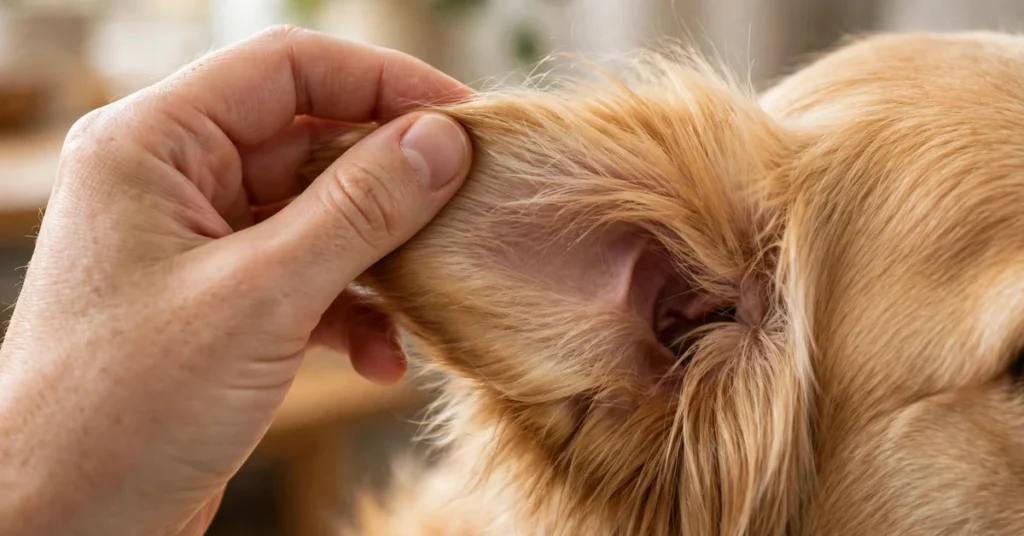
I am Sophie Bennett, a licensed veterinary technician, and I have gently lifted more dog ears than I can count. Spotting dog ear infection symptoms early is one of the kindest things you can do for your dog. Most ear infections start small, and the first hints are easy to miss if you do not know what to look for.
Dogs cannot tell us their ears hurt. Instead they shake their heads, scratch a little more than usual, or pull away when you touch near their ears. If you catch these hints in the first day or two, treatment is often simple and your dog feels better fast.
In this guide I will walk you through the warning signs I check first, the dogs most at risk, how outer ear signs differ from deeper infection signs, and safe home care you can start right away.
Quick Answer
The most common dog ear infection symptoms are head shaking, pawing or scratching at the ear, a sour or yeasty smell, dark brown or yellow discharge, and red, inflamed skin inside the ear. Catching dog ear infection symptoms in the first day or two keeps a simple problem from turning painful, so check your dog’s ears weekly and call your vet as soon as signs appear.
Table of Contents
- Quick Answer
- The 7 Warning Signs of an Ear Infection
- 1. Head Shaking
- 2. Scratching and Pawing
- 3. Bad Smell
- 4. Discharge
- 5. Redness and Inflammation
- 6. Swelling and Crusty Skin
- 7. Pain and Sensitivity
- Which Dogs Are Most Prone?
- Outer Ear vs Middle and Inner Ear Signs
- What Your Vet Will Do
- Safe Home Ear Care Basics
- Mistakes That Make Things Worse
- Final Thoughts
- Related Guides
- Frequently Asked Questions
The 7 Warning Signs of an Ear Infection
Most ear infections show up through a mix of these seven signs. One sign alone may just be normal itch, but two or three together deserve attention. Run through this list once a week when you check your dog’s ears, and you will catch almost every infection early.
1. Head Shaking
Constant head shaking is one of the earliest dog ear infection symptoms, because the ear canal itches and feels full of debris. A dog with an infection often shakes several times an hour, sometimes with real force. If the shaking keeps returning after you distract your dog, treat it as a red flag, not a quirk.
2. Scratching and Pawing
Your dog may paw at the sore ear, rub the side of the head along the carpet, or scratch at the ear flap with a hind leg. This scratching makes the itch worse and can break the skin, which lets bacteria spread further. The scratching itself is the signal to check inside the ear.
3. Bad Smell
Healthy ears have almost no smell. An infected ear often gives off a sour, yeasty, or bread-like odor you can notice by leaning close. Yeast infections smell sweet and musty, while bacterial infections tend to smell sharper and more unpleasant.
4. Discharge
A small amount of light brown wax is normal. Dark brown, black, yellow, or green gunk is not. Yeast infections usually produce dark, waxy, chocolate-colored debris. Bacterial infections often produce yellow or greenish pus-like discharge. Either way, discharge that looks or smells wrong means a vet check is due.
5. Redness and Inflammation
Lift the ear flap and look at the skin inside. It should be pale pink and calm. Red, hot, angry-looking skin means inflammation, and often the whole ear canal looks puffy too. Redness almost always shows up with at least one other sign on this list.
6. Swelling and Crusty Skin
As an infection goes on, the ear flap can swell, and the skin may turn thick, crusty, or scaly around the ear opening. Chronic infections can even narrow the ear canal over time. Swelling is a sign the infection is not fresh anymore, so do not wait to call the vet once you see it.
7. Pain and Sensitivity
A dog with a sore ear may flinch, yelp, or pull away when you touch near the ear. Some dogs become grumpy or shy about being petted on the head. Others tilt their head toward the sore side or hold the ear flat. Pain tells you the infection needs professional treatment, not just home cleaning.
Which Dogs Are Most Prone?
Some dogs get ear infections again and again, and knowing if yours is one of them helps you stay ahead of the problem.
Floppy-eared breeds top the list: Cocker Spaniels, Basset Hounds, Beagles, and Labradors carry ears that trap warm, moist air in the canal, and moisture feeds yeast and bacteria. Swimmers of any breed are also high risk, because water left in the canal after a swim creates the same damp conditions. Dogs with allergies, both food and seasonal, get repeat infections because allergic skin inside the ear swells and traps debris. Puppies and dogs with hairy ear canals, like Poodles and Schnauzers, can be prone as well.
If your dog fits any of these groups, check ears twice a week instead of once, and always dry ears gently after swimming or bathing.
Outer Ear vs Middle and Inner Ear Signs
Most infections start in the outer ear canal (otitis externa). These are the common, easy to spot cases: shaking, scratching, smell, discharge, and redness. They respond well to treatment when caught early.
Sometimes an infection travels deeper into the middle or inner ear, and the signs change. Deeper signs are more serious and always need a vet quickly. This table shows how to tell them apart.
| Sign | Outer Ear Infection (common) | Middle or Inner Ear Infection (serious) |
|---|---|---|
| Head behavior | Shaking and scratching at the ear | Persistent head tilt to one side |
| Balance | Balance is normal | Wobbliness, stumbling, or walking in circles |
| Face | No facial changes | Droopy eyelid, drooling, or a lopsided face |
| Eyes | Eyes look normal | Flickering eye movements from side to side |
| Hearing | Hearing seems fine | Not responding to sounds or seeming deaf |
| Pain level | Mild to moderate discomfort | Strong pain, crying when the head is touched |
| Urgency | See the vet soon, within days | See the vet the same day |
A sudden head tilt, loss of balance, or facial drooping means same-day vet care. These middle and inner ear signs can point to a ruptured eardrum or a deep infection, and waiting makes treatment harder.
What Your Vet Will Do
A vet visit for a suspected ear infection is quick and mostly painless. First your vet looks inside the canal with an otoscope, a small tool with a light, to check for redness, swelling, foreign objects like grass seeds, and whether the eardrum is intact.
Next comes a swab test (cytology). Your vet collects a bit of the discharge and checks it under a microscope, which shows whether the infection is yeast, bacteria, or ear mites, since each needs different treatment.
Treatment usually means a vet-prescribed ear medication applied into the canal, plus guidance on cleaning at home.
Safe Home Ear Care Basics
Home care supports treatment but does not replace a vet visit for a real infection. Here is what is safe to do at home:
Use only a vet-approved ear cleaner. Never pour water, peroxide, alcohol, or home mixes into the canal. They sting damaged skin and can make infection worse. A cleaner made for dogs has the right pH and drying agents.
Clean gently, and only the parts you can see. Fill the canal with cleaner, massage the base of the ear softly for 20 to 30 seconds, then let your dog shake. Wipe the flap and outer opening with a cotton ball. Never push cotton swabs deep into the canal, since you can pack debris down or hurt the eardrum.
Dry ears after water play. After swimming or a bath, gently wipe the inside of each ear flap dry. For regular swimmers, a drying ear cleaner used right after swimming prevents many infections.
Mistakes That Make Things Worse
I see the same well-meaning mistakes in the clinic every week, and they all slow healing.
Waiting too long. Ear infections rarely clear up on their own. A mild infection can reach the middle ear in a week or two, and deep infections are far harder to treat.
Using human ear drops or leftover medication. Old medications may be expired or wrong for this type of infection, and some human ingredients can damage a dog’s eardrum.
Over-cleaning sore ears. If the ear looks angry, let the vet see it first.
Stopping treatment early. Dogs often feel better after a few days, but the infection can still be alive deeper in the canal. Always finish what your vet prescribed.
Final Thoughts
Once you know the dog ear infection symptoms, checking ears becomes a quick weekly habit that takes less than a minute. Shaking, scratching, smell, discharge, redness, swelling, and pain are the seven signs to watch, and any pair of them deserves a closer look.
Catch infections early and most clear up with simple treatment. Let them linger and they can travel deeper and hurt your dog far longer. When in doubt, a quick vet check is always the kinder choice.
Related Guides
- Dog UTI Symptoms: Signs Every Owner Should Know
- My Dog Has Diarrhea: What to Do Right Now
- Dog Diarrhea: Causes, Remedies & When to Worry
- What Can Dogs Eat? Complete Safe Foods List
- Best Dog Foods for Sensitive Stomach
- Can Dogs Have Cheese? Vet Answers
- Dog Treats: 9 Healthy Picks Every Dog Owner Must Try
- Chocolate Lab Guide: 9 Facts Every Owner Must Know
For a deeper look at ear infection signs and causes, see VCA Animal Hospitals on ear infections in dogs. For practical owner guidance, the AKC guide to dog ear infections is another trusted read.
Frequently Asked Questions
What are the first dog ear infection symptoms?
The earliest warning signs are head shaking, light scratching at the ear, and a faint change in smell. You may also see a little extra dark wax inside the ear flap. These first signs can appear days before redness or discharge, so catching them early makes treatment simpler.
How can I tell if my dog has an ear infection or just ear mites?
Ear mites and ear infections share signs like head shaking, scratching, and dark discharge. Mites are more common in puppies and spread between pets, while infections are more common in adult dogs with floppy ears or allergies. Only a vet swab test can tell them apart, so do not guess and treat at home.
Can a dog ear infection go away on its own?
A true ear infection almost never clears up on its own. Mild irritation sometimes settles, but real infections caused by yeast or bacteria keep growing without treatment. Left alone, an outer ear infection can reach the middle ear within one to two weeks and become much harder to treat.
Are dog ear infections contagious to other pets or people?
Yeast and bacterial ear infections are not contagious to people or other pets. Ear mites are the exception, since they spread easily between dogs and cats in the same home. If your vet finds mites, your other pets should be checked too.
Why does my dog keep getting ear infections over and over?
Repeat ear infections usually point to an underlying cause, most often allergies. Food sensitivities and seasonal allergies make the skin inside the ear swell and trap moisture. Treating each flare without addressing the allergy behind it leads to a cycle, so ask your vet about allergy testing if infections return.
When is a dog ear infection an emergency?
Call your vet the same day if you see a sudden head tilt, loss of balance, stumbling, a droopy face, flickering eye movements, or severe pain when the ear is touched. These signs can mean the infection has reached the middle or inner ear, or the eardrum may be damaged, and waiting makes treatment harder.