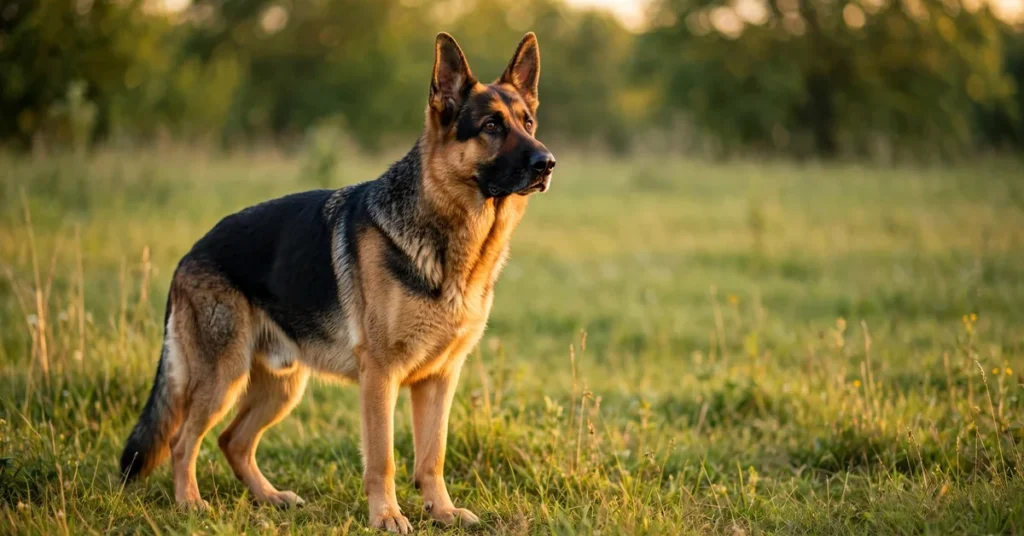
If you have ever typed alsatian into Google and then stared at the results wondering whether you are looking at a completely different breed, you are not alone. I get this exact question from clients at least once a month, usually from someone who grew up in the UK or whose parents did. They remember the big, noble police dogs of their childhood and want to know if that dog still exists under another name.
Here is the short version before we dig into the full story: an Alsatian is a German Shepherd Dog. Same breed, same bloodline, same dog. The two names come from a hundred year old story about war and a very practical renaming. Once you know that story, the confusion disappears for good.
I am Marcus Reed, a CPDT-KA certified trainer with eight years and more than 300 family dogs under my belt. My own dog Cooper is a Labrador who has shared many a training field with German Shepherds. In this guide I will cover why the breed has two names and what you need to know about temperament, training, health, and cost.
Quick Answer: Is an Alsatian the Same as a German Shepherd?
Yes. An Alsatian is the German Shepherd Dog, known by its older British name. The breed was renamed in Britain after the First World War, and the new nickname stuck with the public for decades. The Kennel Club officially changed the name back to German Shepherd Dog in 1977. If a breeder advertises puppies under the old name today, you are looking at German Shepherd puppies, full stop.
📋 Contents (click to open)
Why Does This Breed Have Two Names?
The story starts in Germany in 1899, when cavalry officer Captain Max von Stephanitz set out to create the perfect working dog: smart, athletic, and brave. Soldiers on both sides of the First World War noticed these dogs, and British soldiers brought them home as companions.
The WWI Rename
In the years after the war, anything German was deeply unpopular in Britain. Breeders did not want to promote a dog with “German” in its name, so the Kennel Club renamed the breed after the Alsace region on the French German border. The new name stuck in Britain for the next sixty years, and an entire generation of dog lovers grew up never hearing the words German Shepherd at all.
When the Original Name Came Back
By the 1970s the old name had become more confusing than helpful, so the Kennel Club officially restored German Shepherd Dog in 1977. Most other kennel clubs around the world had been using it all along. That is why your grandmother uses one name, your vet uses the other, and you are left wondering if they mean two different dogs. They do not. It is one breed with a complicated naming history.
Is It Exactly the Same Dog?
Genetically and officially, yes. No major kennel club recognizes a separate breed under the old name. A dog registered as a German Shepherd Dog in the United States and one that a British family remembers fondly from childhood belong to the same breed, with the same breed standard describing the same athletic, usually tan and black dog.
The Real Difference: Working Lines vs Show Lines
So why do some people insist the dogs they remember looked different from the German Shepherds they see today? What they are usually noticing is the split between working lines and show lines, not two breeds. Working line dogs, often bred in Germany, the Czech Republic, and Belgium for police and sport work, tend to be straighter backed, leaner, and intensely driven. Show line dogs, especially American show lines, often have the dramatically sloped back you see in the conformation ring. When choosing a puppy, ask about working versus show lines. That question matters far more than which name the breeder uses.
Alsatian vs German Shepherd: Side by Side
The table below clears up the naming confusion and shows the line differences that actually affect the dog you bring home.
| Feature | British naming tradition | American naming tradition |
|---|---|---|
| Official breed name | German Shepherd Dog (UK Kennel Club) | German Shepherd Dog (AKC) |
| Where the old name came from | British rename after WWI, reversed in 1977 | Original name from 1899, used continuously |
| Typical look | Often straighter backed European lines | Often the sloped back show line type |
| Size | Males 24 to 26 inches, 65 to 90 pounds | Males 24 to 26 inches, 65 to 90 pounds |
| Temperament | Loyal, confident, protective, high energy | Loyal, confident, protective, high energy |
| Best for | Experienced owners, active families, working homes | Experienced owners, active families, working homes |
Notice how the two columns are nearly identical. That is the whole point. The name tells you about the speaker’s background, not about the dog. What shapes your dog’s life is the line it comes from, the breeder’s ethics, and the training you put in during the first year.
Temperament: What Are They Really Like?
A well bred and well raised German Shepherd is one of the most rewarding dogs you will ever live with. They bond fiercely to their family, they genuinely want a job to do, and that famous loyalty is real. My clients’ Shepherds learn the household routine within days and take their self appointed guard duties very seriously.
Are They Good With Kids?
Yes, with two big conditions: the dog must be properly socialized as a puppy, and the children must be taught how to behave around dogs. I have worked with Shepherds who were the gentlest nannies imaginable. Supervise every interaction, teach the kids to respect the dog’s space, and you will have a wonderful family protector.
How Are They With Strangers?
Expect polite aloofness, not instant friendship. A stable dog will watch a visitor calmly, take its cue from you, and relax once you signal all is well. With other dogs, early socialization is everything: puppies that meet plenty of friendly dogs before sixteen weeks usually grow into sociable adults.
Training Tips From a Pro
If one breed rewards training, it is this one. German Shepherds rank among the smartest dogs in the world and learn new commands in a handful of repetitions with clear, reward based methods. But that intelligence is a double edged sword. A bored Shepherd does not sit quietly. It redesigns your garden and invents games with rules only it understands.
Start the day your puppy comes home. Teach name recognition, sit, and a solid recall in the first week, and enroll in a puppy class by ten weeks. Then give the dog a job, any job. Nose work, tracking, agility, or even a structured daily routine of fetch plus drills will do. Skip the job and you will spend your time managing behavior problems instead of enjoying your dog.
One honest warning: this is not a first dog for most people. Their strength, drive, and sensitivity to handler mistakes mean novice owners often feel overwhelmed by month six. If you are new to dogs but your heart is set on this breed, budget for a professional trainer from day one. It is the best money you will spend.
Health and Lifespan
These dogs typically live 9 to 13 years. The big health concerns are hip and elbow dysplasia, which is why you should only buy from a breeder who provides OFA or PennHIP scores for both parents. Degenerative myelopathy, a progressive spinal condition, can be screened with a simple DNA test. Bloat is a genuine emergency in this deep chested breed, so learn the warning signs and discuss prevention with your vet. For a full vet reviewed rundown, PetMD’s German Shepherd health guide is an excellent resource.
Day to day, expect serious shedding. The double coat blows out heavily twice a year and sheds steadily the rest of the time. Brush several times a week and make peace with your vacuum cleaner becoming your most used appliance. Exercise needs are real too: one to two hours of genuine activity daily. A tired Shepherd is a good Shepherd, and I mean that literally.
How Much Does One Cost?
From a reputable breeder who health tests both parents, expect to pay between $1,500 and $3,500 for a pet quality puppy in the United States, with top working line prospects costing more. Rescue is a wonderful option: breed specific German Shepherd rescues routinely have young adults available for adoption fees in the low hundreds, and these dogs are often already house trained.
Budget honestly for ongoing costs. A large, active dog eats a lot of quality food, needs annual vet care, and does best with professional training in the first year. This is a genuine financial commitment for a decade or more, and it is far kinder to face that now than at month eight.
For the official breed standard and history, see the AKC German Shepherd Dog breed page.
Conclusion
The mystery is solved: the old British name and German Shepherd describe the same remarkable dog, separated only by a century old renaming. Whatever name you grew up saying, what matters is the dog underneath the label.
And that dog is extraordinary in the right home: intelligent, loyal, brave, and endlessly trainable. Give it structure, exercise, a job, and consistent kind leadership, and you will understand why this breed has been trusted by shepherds, police forces, and families for over a hundred years. Choose your breeder carefully and start training early.
Related Guides
- German Shepherd Puppy: Complete First Year Guide (2026)
- How Long Do German Shepherds Live? 9 Proven Tips (2026)
- Police Dog Breeds: 10 Elite K9 Breeds and Their Roles
- Belgian Malinois Puppy: The Honest Guide Most Owners Read Too Late
- Guard Dog Breeds: 10 Best Protectors for Families (2026)
- Dog Obedience Training: 5 Commands Every Dog Should Know
- Smartest Dog Breeds: 15 Genius Pups Ranked (2026)
- Kangal Dog: Complete Guide
Frequently Asked Questions
Is an Alsatian the same as a German Shepherd?
Yes. It is simply the older British name for the German Shepherd Dog. The breed was renamed in the UK after the First World War, and the original name was officially restored in 1977. There is no separate breed under the old name.
Why did the British call it a different name?
After the First World War, anything German was unpopular in Britain, so the Kennel Club gave the breed a new name drawn from the Alsace region. That name stuck with the British public for decades even after the official name returned to German Shepherd Dog in 1977.
Is the old British type bigger than the modern German Shepherd?
No. It is the same breed, so the size is identical: males typically stand 24 to 26 inches tall and weigh 65 to 90 pounds, females slightly smaller. Any difference you notice comes from working versus show lines, not the name.
Are German Shepherds good family dogs?
They can be outstanding family dogs for the right household: loyal, protective, and usually gentle with children they are raised with. But they need serious exercise, early socialization, and consistent training, so they suit experienced, active families best.
How long do German Shepherds live?
The average lifespan is 9 to 13 years. It depends heavily on genetics, weight management, and exercise, so buying from a breeder who health tests for hip dysplasia gives your dog the best start.
What is the difference between a German Shepherd and a Belgian Malinois?
They are different breeds that look similar at a glance. The Malinois is smaller, lighter, and more intense, which is why police and military units increasingly favor it. The German Shepherd is larger, calmer indoors, and usually a better fit for family life.