You want a dog that protects your family. But here is the question most people skip: what kind of protection do you actually need?
Guard dog breeds are not all the same. A barking watchdog and a trained protection dog are very different animals. Pick the wrong one and you get stress instead of safety.
I am Marcus Reed, a certified dog trainer with 8 years of experience. I have trained family protection dogs and I have seen what goes wrong when people choose by looks alone.
This guide breaks down the protection spectrum, the best breeds at each level, and the honest truth about training.
Quick Answer: Best Guard Dog Breeds
Short on time? Here are the top picks by protection level.
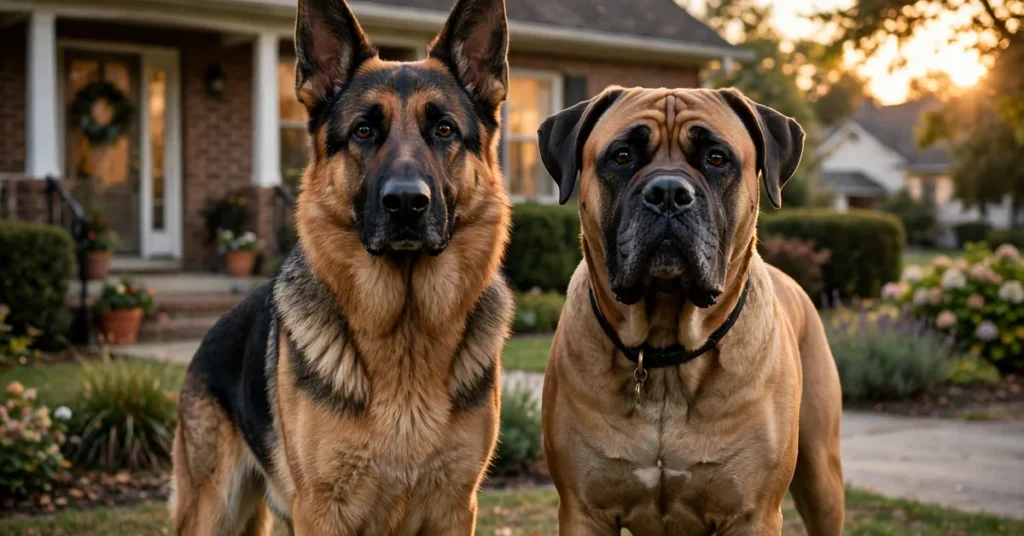
Best all around family guardian: German Shepherd. Smart, loyal, naturally protective.
Best gentle giant: Bullmastiff. Calm indoors, fearless when it counts.
Best for experienced owners: Rottweiler or Doberman. Powerful and devoted, need firm training.
Best low key watchdog: Boxer or Great Dane. Alert presence without the intensity.
Keep reading to find which level of protection fits your home.
📋 Contents (click to open)
The Protection Spectrum: Watchdog vs Guard Dog
Not every protective dog does the same job. Know the three levels before you choose.
Level 1: Watchdog
Barks to alert you. That is it. Most alert breeds do this naturally. A barking Boxer or barking Beagle both count.
Level 2: Guard Dog
Stands its ground and deters intruders with presence. Bullmastiffs and Great Danes excel here. They look serious and stay calm.
Level 3: Protection Dog
Trained to respond to threats on command. German Shepherds, Malinois, and Dobermans do this work. This level requires professional training. Always.
Marcus Reed’s Rule
Most families need Level 1 or 2. A confident, well trained dog with a deep bark deters 99 percent of trouble. Level 3 dogs are serious commitments that need daily work for life.
Top 10 Guard Dog Breeds Compared
Here are the strongest candidates, ranked by overall family suitability.
German Shepherd (50 to 90 lbs). The gold standard. Brilliant, loyal, naturally protective. Needs 1 to 2 hours of exercise and training daily.
Rottweiler (80 to 135 lbs). Powerful and deeply devoted. Calm with family, serious with strangers. Needs an experienced, confident owner.
Doberman Pinscher (60 to 100 lbs). Sleek, fast, and sharp. One of the most trainable guardian breeds. Needs lots of mental work.
Bullmastiff (100 to 140 lbs). The gentle giant of guard dog breeds. Quiet, calm indoors, fearless when threatened. Great for less active families.
Boxer (48 to 85 lbs). Playful protector. Wonderful with kids, alert to strangers. High energy but very trainable.
Great Dane (110 to 175 lbs). Size alone deters trouble. Surprisingly gentle and calm. Shorter lifespan is the trade off.
Cane Corso (88 to 110 lbs). Italian mastiff with intense loyalty. Best for experienced owners only. Needs firm, fair leadership.
Belgian Malinois (40 to 80 lbs). Police and military favorite. Extreme drive and intelligence. Not a casual pet. Needs a job every single day.
Akita (70 to 130 lbs). Dignified and aloof. Fiercely loyal to family, reserved with strangers. Independent thinker.
Giant Schnauzer (55 to 95 lbs). Smart, bold, and territorial. Excellent working dog that bonds hard with its people.
Which Guard Dog Breeds Fit Families Best
Protection means nothing if the dog cannot live safely with your kids. Here is my honest ranking for families.
| Breed | Kid Friendliness | Protection Level | Training Need | Best For |
|---|---|---|---|---|
| Boxer | Excellent | Moderate | Moderate | Active families with kids |
| German Shepherd | High | Very high | High | Active, structured homes |
| Bullmastiff | High | High | Moderate | Calmer families, big space |
| Great Dane | High | Moderate | Moderate | Gentle giant lovers |
| Doberman | Good (with training) | Very high | Very high | Experienced owners |
| Rottweiler | Good (with training) | Very high | Very high | Experienced owners |
| Giant Schnauzer | Good | High | High | Active, dog savvy homes |
| Cane Corso | Fair | Very high | Very high | Experts only |
| Belgian Malinois | Fair | Extreme | Extreme | Working homes only |
| Akita | Fair | High | High | Quiet adult homes |
PetMD’s Rottweiler guide agrees: temperament and training matter far more than size. And the AKC German Shepherd page has the official profile of the world’s most trusted guard breed.
The Training Truth Nobody Tells You
A guard dog breed without training is just a big liability. Here is what it really takes.
Socialization Is Non-Negotiable
Expose your puppy to 100 different people, places, and sounds before 16 weeks. A guard dog must know what normal looks like before it can spot abnormal.
Obedience Comes First
Sit, stay, come, heel, and leave it must be rock solid. A protection dog that does not obey is dangerous, not protective.
Protection Training Is Specialized
Do not try this from YouTube videos. Find a certified protection dog trainer. Expect 12 to 24 months of work for a reliable Level 3 dog.
Never train aggression. Real protection training builds control, not anger. Any trainer who encourages your dog to bite out of fear or rage is creating a lawsuit, not a guardian. Walk away.
The Real Cost of a Protection Dog
Guard dog breeds cost more than average dogs. Budget honestly.
- Purchase price: $1,500 to $4,000 from a reputable breeder. Trained adults start at $15,000 and go past $50,000.
- Professional training: $150 to $300 per month for obedience. Protection work runs $5,000 to $20,000 total.
- Food: $60 to $120 per month for large breeds.
- Insurance: Some insurers charge more or exclude certain breeds. Check before you buy.
- Vet care: Large breeds cost more for everything, from meds to surgery.
Money saving tip: A well trained Boxer or Bullmastiff from a shelter gives you 90 percent of the protection at 10 percent of the cost. Do not overlook rescue.
Conclusion
The best guard dog breeds are not the toughest looking. They are the best trained and the best matched to your life.
Choose temperament over intimidation. Choose training over size. A calm, obedient, confident dog protects your family far better than an aggressive one ever will.
Start with socialization, commit to training, and you will have a guardian and a family member in one.
Related Guides
- Livestock Guardian Dog Breeds: 10 Best Farm Protectors
- Police Dog Breeds: 10 Elite K9 Breeds and Their Roles
- German Shepherd Puppy: Complete First Year Guide (2026)
- Doberman Puppy: Training, Care & Cost Guide (2026)
- Rottweiler Puppy: Training, Socialization & Care (2026)
- Belgian Malinois Puppy: The Honest Guide Most Owners Read Too Late
- Most Aggressive Dog Breeds: 12 Ranked (Truth May Shock You)
- Reactive Dog Training: A Calm Step-by-Step Plan That Works
- Biggest Dog Breeds: 10 Gentle Giants You Must See
Frequently Asked Questions
What is the best guard dog breed for a family?
The German Shepherd is the best all around family guard dog, combining intelligence, loyalty, and natural protective instincts with trainability. The Boxer and Bullmastiff are also excellent for families wanting a calmer guardian.
Are guard dogs safe with children?
Yes, when properly trained and socialized. Breeds like Boxers, Bullmastiffs, and German Shepherds are known for being gentle with their own family children. Early socialization and supervision are essential with any large protective breed.
What is the difference between a watchdog and a guard dog?
A watchdog barks to alert you to intruders but takes no further action. A guard dog will also stand its ground and use its presence to deter threats. A protection dog is professionally trained to respond to threats on command.
Do guard dogs need special training?
Yes. All guard dog breeds need thorough obedience training and early socialization. True protection work requires a certified professional trainer and 12 to 24 months of specialized work. Never attempt protection training without expert guidance.
What is the easiest guard dog breed to train?
The German Shepherd and Boxer are among the easiest guard dog breeds to train thanks to their intelligence and eagerness to please. The Doberman is also highly trainable but needs an experienced handler.
Are male or female dogs better guard dogs?
Both can be excellent guardians. Males tend to be more territorial while females are often more protective of family members specifically. Temperament, training, and individual personality matter far more than gender.