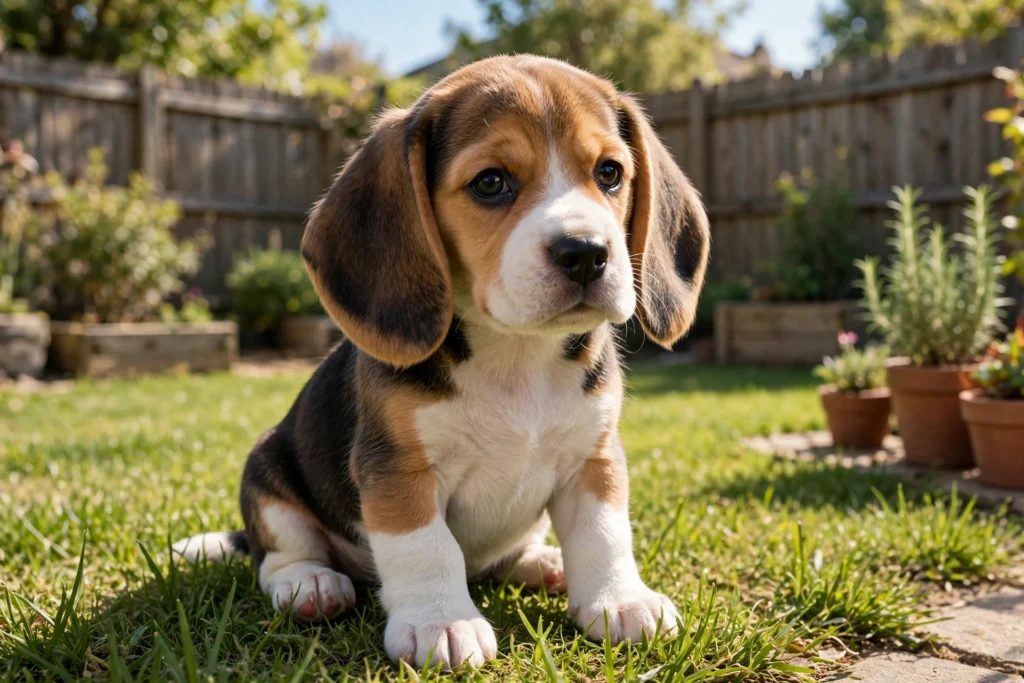
The first time I met a beagle puppy, he was stuck halfway under a fence, front half gone, nose-deep in the neighbor’s flower bed. That is the beagle puppy experience. You are not raising a dog with a nose. You are raising a nose with a dog attached.
I am Marcus Reed, a certified dog trainer with eight years of experience and over 300 family dogs trained. Beagles are my favorite kind of chaos: sweet, funny, stubborn, and ruled by an unbelievable sense of smell. This guide shows you how to work with that nose instead of fighting it.

Quick Answer
Beagle puppies need daily scent games, a long line for recall, strict portion control, and patient crate training. They are smart but scent-driven, so recall is the hardest skill to teach. Never go off leash in unfenced areas. A tired nose is a happy beagle.
📋 Contents (click to open)
- Quick Answer
- The Nose Rules: Why Your Beagle Puppy Is Born to Sniff
- Scent Games That Tire Out Your Beagle Puppy
- Recall Training for a Scent Hound
- The Food Obsession and the Obesity Trap
- The Baying and Howling Talk
- Crate Training and Alone Time
- Exercise the Beagle Way: A Beagle Puppy Daily Routine
- Conclusion
- Related Guides
- Frequently Asked Questions
The Nose Rules: Why Your Beagle Puppy Is Born to Sniff
Beagles have around 220 million scent receptors. Humans have about five million. Your beagle puppy lives in a world of smell that you cannot imagine.
This is why your puppy ignores you at the park. It is not personal. When a beagle catches a scent, the nose takes over and the brain follows the trail. I call it nose brain, and every beagle owner must understand it.
Fighting the nose never works. Beagles were bred to track rabbits for hours. Give the nose a job instead of trying to switch it off.
Scent Games That Tire Out Your Beagle Puppy
Fifteen minutes of scent work tires a beagle puppy out more than an hour of plain walking. These three games are all you need.
The Treat Scatter
Toss small treats into the grass and say “find it.” Your puppy hunts with the exact brain circuits beagles were bred for.
Box Search
Hide treats in a few boxes and leave some empty. Your puppy checks each one, building focus and confidence.
Snuffle Mats
A snuffle mat is a rug with flaps that hide kibble. It turns one meal into 15 minutes of nose work.
Recall Training for a Scent Hound
Let me be straight. Recall is the hardest skill you will teach a beagle puppy. Their nose beats their desire to please you.
Start Indoors
Call your puppy, then reward with real meat. Make coming to you the best deal in the house.
Move to the Long Line
A long line is a 15 to 30 foot leash. It gives freedom while you keep control. Practice recall on the line only. Every ignored recall teaches your puppy that ignoring you works.
Never Off Leash in Unfenced Areas
A beagle on a scent can travel miles. It will not hear you. Use fenced yards only.
The Food Obsession and the Obesity Trap
Beagles are food obsessed. They counter surf and open trash cans. This is not greed. It is how scent hounds are wired.
Beagles gain weight faster than almost any breed. Extra weight leads to joint pain, breathing trouble, and a shorter life. I have watched sweet beagles turn sluggish by age three.
How to Win the Food Fight
- Measure every meal. Use a measuring cup, not a heaping scoop.
- Limit treats to 10% of daily calories, training treats included.
- Lock the trash. Use a locking lid. Your puppy will test it.
- Skip free feeding. Put food down for 15 minutes, then pick it up.
- Feel the ribs. You should feel them easily under a light fat cover. Ask your vet to show you.
For breed standards, see the American Kennel Club’s beagle page and PetMD’s beagle breed guide.
The Baying and Howling Talk
Beagles bay: a deep, musical howl once used to alert hunters. Your beagle puppy will find its voice around four to six months. You cannot fully train it out, but you can manage it.
Why They Bay
Beagles bay when excited, lonely, bored, or alert. Boredom is the biggest trigger I see.
How to Keep It Reasonable
- Tire the nose daily. Scent games are your best tool.
- Reward quiet. When your puppy is calm, say “yes” and treat.
- Never yell over the baying. Your puppy thinks you are joining in.
- Warn your neighbors early to prevent complaints later.
Crate Training and Alone Time
Beagles hate being alone. They were bred to work in packs. Done right, crate training gives your puppy a safe den instead of a lonely house.
Make the Crate a Good Place
Feed meals in the crate and hide surprise treats in it. Keep sessions short. The crate should feel like a cozy bedroom, never a jail cell.
Build Alone Time Slowly
Start with five minutes alone in the next room, with a Kong or snuffle mat. Your puppy should link alone time with good things.
Exercise the Beagle Way: A Beagle Puppy Daily Routine
Beagle puppies need about five minutes of exercise per month of age, twice a day. The trick: sniffing counts as exercise for a beagle. A slow sniff walk tires them more than a fast march.
| Area | Typical Puppy | Beagle Puppy |
|---|---|---|
| Recall | Learns in weeks | Hardest skill; use a long line |
| Exercise | Running and fetch | Sniff walks tire them best |
| Food | Eats normally | Obsessed; strict portions |
| Noise | Barks a little | Bays and howls; manage boredom |
| Alone time | Adjusts with training | Hates it; crate train early |
Morning scent game, midday sniff walk, evening calm chew. Beagles relax when they know what comes next.
Conclusion
Raising a beagle puppy is joyful chaos. There will be howling and counter surfing, and moments when the nose wins and you laugh anyway. That is normal.
Work with the nose, not against it. Scent games, a long line, measured meals, and patient crate training turn chaos into a sweet, loyal companion. Beagles are stubborn, funny, and gentle to the bone. Soon the nose will know that home is the best scent of all.
Related Guides
- German Shepherd Puppy: Complete First Year Guide (2026)
- Puppy Training: 7-Day Starter Plan That Works (2026)
- Best Puppy Food: 7 Smart Label Checks Before You Buy (2026)
- Puppy Vaccine Schedule: What Happens at Every Visit (2026)
- Border Collie Puppy: The Complete Genius Puppy Manual
- Australian Shepherd Puppy Guide: Raise a Calm, Happy Aussie
- Cocker Spaniel Puppy: First Month Care & Training Guide
- How Much to Feed a Puppy: Simple Chart by Age and Size
- Shiba Inu Puppy: Honest Training & Care Guide (2026)
- Schnauzer Puppy: Care, Training & Grooming Guide (2026)
Frequently Asked Questions
Are Beagle puppies easy to train?
Beagle puppies are smart but scent driven, so they are not the easiest to train. They learn fast with food rewards. Recall and leash manners take the most patience. Short, fun sessions beat long, serious ones.
How much exercise does a Beagle puppy need?
About five minutes per month of age, twice daily. A four month old needs roughly 20 minutes per session. Sniff walks and scent games tire a beagle puppy out more than plain running. Avoid hard running on pavement until joints mature.
Why does my Beagle puppy howl so much?
Howling, called baying, is natural beagle communication. Puppies bay from excitement, loneliness, or boredom. Daily scent games and enough exercise reduce it a lot. Never yell over the howling, since your puppy thinks you are joining in.
Are Beagle puppies good with kids?
Yes, beagles are usually wonderful with kids. They are sturdy, playful, and patient. Always supervise young children and teach gentle handling. Beagles love being part of a busy family pack.
How do I stop my Beagle puppy from running off?
Use a long line on every walk and practice recall in fenced areas only. Never let a beagle puppy off leash in an unfenced area. A beagle on a scent can travel miles and will not hear you. Reward every recall with something amazing.
Do Beagle puppies bark a lot?
Beagles bark less than they bay. Baying is their signature sound, a deep musical howl. They bay when excited, bored, or lonely. A tired nose and a good daily routine keep noise at a reasonable level.